
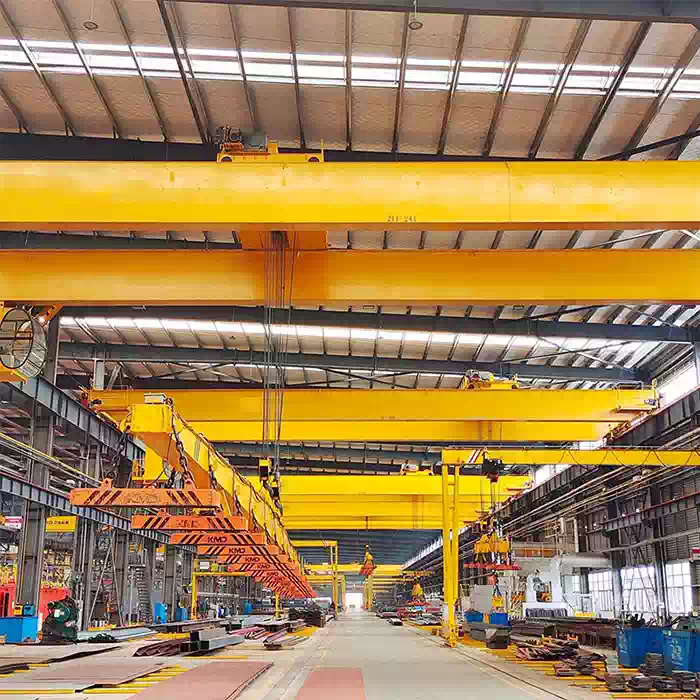
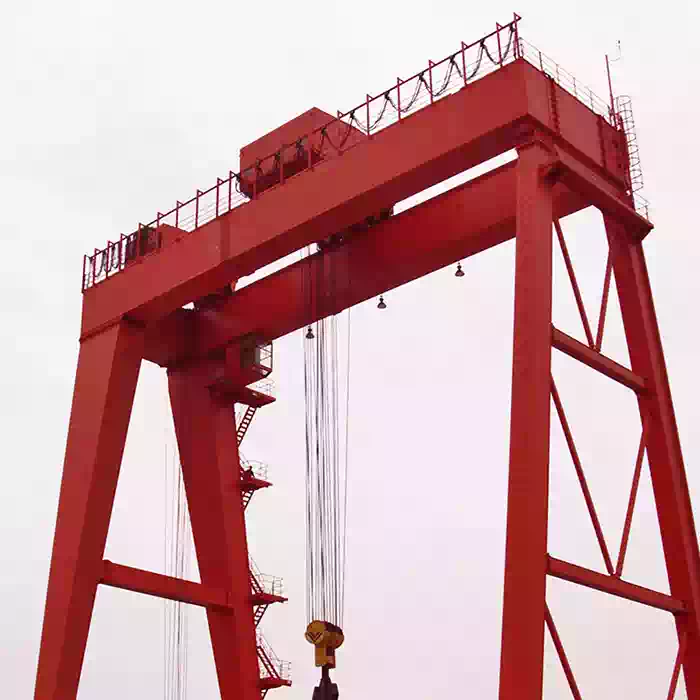
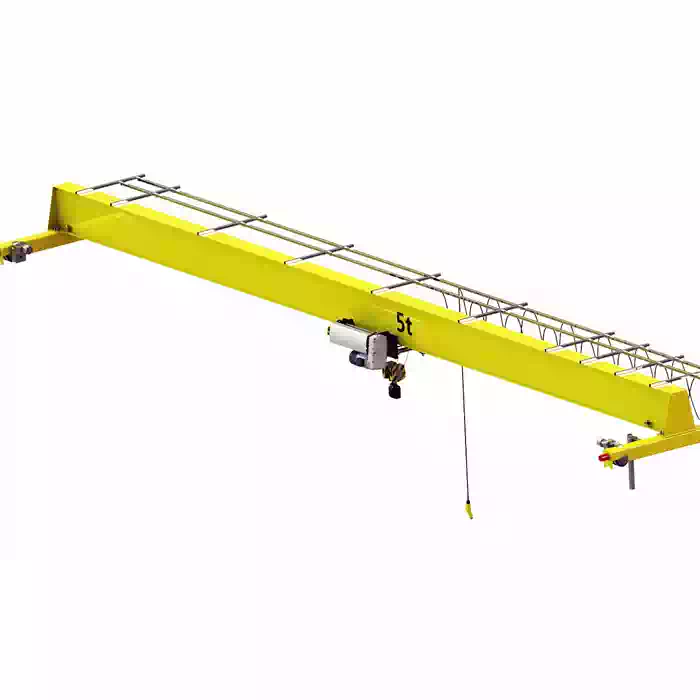
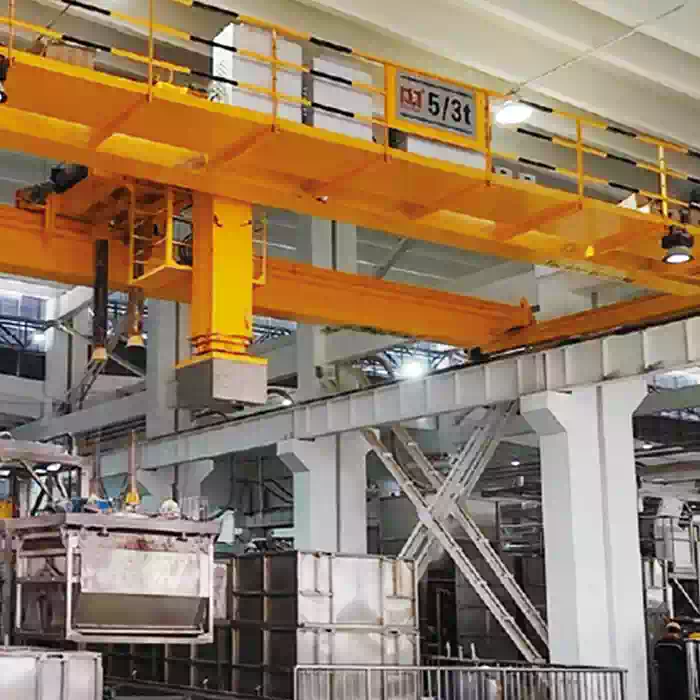
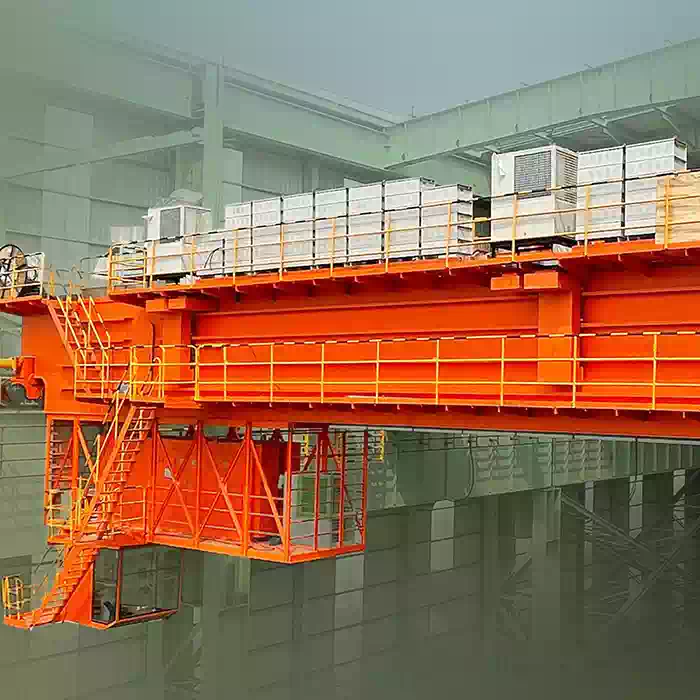
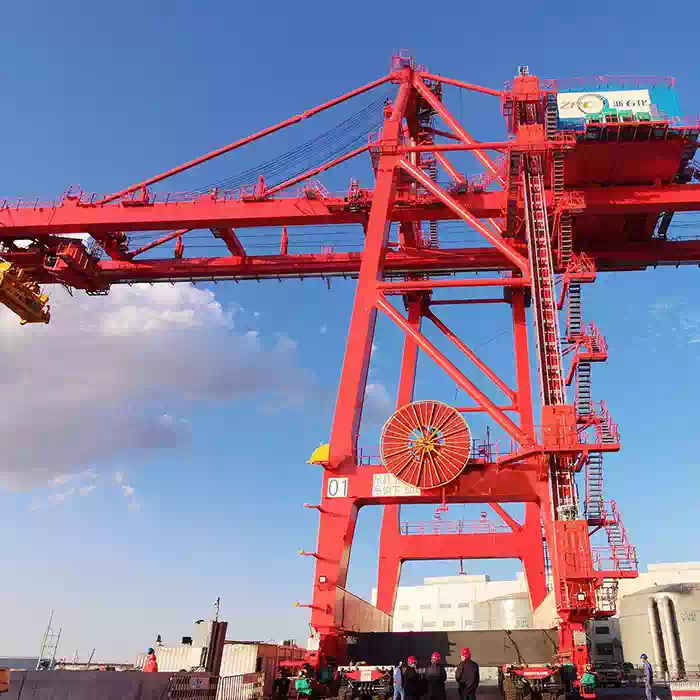
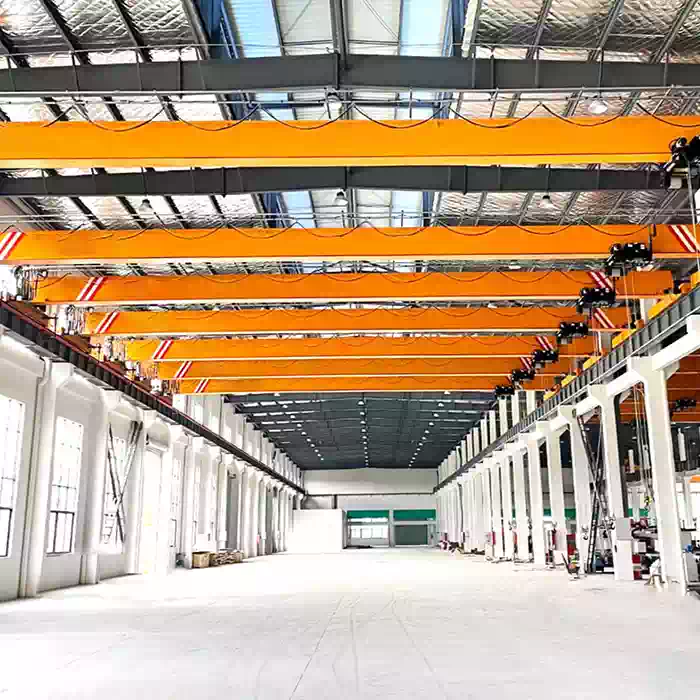
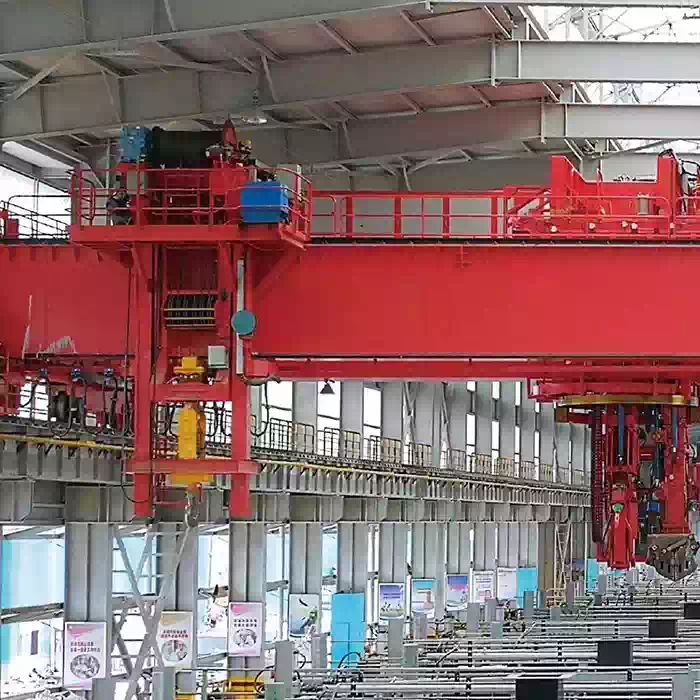

Many people are familiar with cranes, but choosing the right gantry crane is not always straightforward.
Maybe you would say: "I want a gantry crane with a lifting capacity of 50t or 500t." But considering the lifting load is relatively secondary. In fact, for professional designers, the first thing they want to know is the client's workplace and on-site conditions.
For example, if your facility is located near the coast, the crane may be exposed to high levels of salt spray, humidity, and seawater corrosion.At this time, the designer should first consider the rust prevention of the steel structure, including surface treatment, anti-corrosion coatings, and necessary protective measures, to avoid the crane breaking down within one or two years.
If your site space is limited, the traditional two-legged support may not be suitable for your actual conditions. The designer will prioritize the semi-gantry crane, maximizing the use of the space structure.
This is why choosing a suitable gantry crane is not just determining a "50t" or "100t" lifting capacity.
A truly suitable solution should be determined comprehensively from multiple aspects such as the working environment, site conditions, lifting requirements, span, lifting height, working grade, and equipment operation mode.
In this guide, we will look at gantry crane selection from a crane designer's perspective and explain the key factors that should be considered before a gantry crane is designed or purchased.
1. Start with Your Lifting Requirements
Before choosing a gantry crane type or requesting a quotation, the actual lifting requirements should be defined.
The manufacturer needs to understand not only how heavy the load is, but also what is being lifted, how often it is lifted, how high it needs to be lifted, and how the load will be moved.
Lifting Capacity
Lifting capacity is one of the first parameters to define when choosing a gantry crane.
A 50-ton gantry crane that occasionally handles a 50-ton load may have very different operating requirements from a crane that handles loads close to its maximum capacity throughout the working day.
Therefore, the customer should provide:
Maximum load weight
Typical load weight
How often the maximum load is handled
Whether lifting accessories are used
Whether future loads may be heavier
The total suspended load should also be considered. Depending on the application, lifting beams, hooks, slings, spreader beams, or other lifting devices may add weight to the load being handled.
For this reason, the rated capacity should be selected according to the actual lifting requirements rather than simply the average load.
Load Type and Load Characteristics
Even when two loads have the same weight, their characteristics can result in very different lifting requirements.
For example, lifting a 50-ton steel pipe is not the same as lifting a 50-ton solid steel ingot.
A long steel pipe may be more likely to swing during lifting. Depending on its dimensions, center of gravity, and lifting points, a lifting beam, slings, or multiple lifting points may be required to keep the load stable.
A solid steel ingot, on the other hand, is more compact and may have a more concentrated center of gravity, so the lifting arrangement can be different.
Therefore, the customer should provide the manufacturer with information about:
Load dimensions
Load shape
Center of gravity
Lifting points
Required lifting attachments
Whether the load needs to be rotated or positioned precisely
These details can affect the hoist arrangement, hook configuration, trolley design, and required working space.
Lifting Height
The required lifting height should also be clearly defined before the gantry crane is designed.
Lifting height is not determined only by how high the load needs to be lifted. The load dimensions, lifting accessories, surrounding structures, and required clearance also need to be considered.
For example, a customer may require a 10-meter lifting height, but the designer also needs to know the height and dimensions of the load, the length of the lifting accessories, the available headroom, and whether there are roofs, conveyors, buildings, vehicles, or other obstacles above the working area.
It is therefore better to define the required highest and lowest hook positions rather than providing only an overall crane height.
2. Determine the Required Gantry Crane Span
Span is another key parameter that should be determined before selecting a gantry crane.
The gantry crane span is generally the distance between the two supporting sides or travel paths of the crane. It determines how much working area the crane can cover.
However, the span should not simply be made as large as possible.
The required span should be based on:
Width of the working area
Required hook coverage
Position of the loads
Rail or wheel-path layout
Leg clearance
Nearby buildings and equipment
Required cantilever
Available installation space
For example, if the crane needs to cover an 18-meter-wide working area, an 18-meter span may not necessarily be the best design. The position of the rails, required hook approach, leg dimensions, and surrounding obstacles also need to be considered.
A larger span can increase the size and weight of the main girder and may also affect wheel loads, structural requirements, transportation, installation, and overall gantry crane price.
Therefore, the goal is not to select the largest possible span, but to select a span that provides the required working coverage without creating unnecessary structural or installation costs.
3. Choose the Right Gantry Crane Configuration
Once the lifting requirements and site dimensions are understood, the next question is:
Which type of gantry crane is suitable for the application?
There is no single gantry crane configuration that is suitable for every project. The choice should be based on lifting capacity, span, lifting height, working class, site layout, and the available supporting structure.
Single Girder vs. Double Girder Gantry Crane
A single girder gantry crane has one main girder, while a double girder gantry crane has two parallel main girders.
A single girder gantry crane is generally considered when:
The lifting capacity is moderate
The span is within a suitable range
The working duty is not extremely demanding
A more economical structure is preferred
A compact crane arrangement is sufficient
A double girder gantry crane may be more suitable when:
Heavier loads need to be lifted
A larger span is required
Higher lifting heights are required
The crane will operate under demanding working conditions
Additional space or support is required for the trolley, maintenance platform, or special lifting equipment
The choice between a single girder and double girder gantry crane should not be based on lifting capacity alone. Span, lifting height, duty class, trolley arrangement, maintenance requirements, and future operating requirements should also be evaluated.
Full Gantry Crane vs. Semi-Gantry Crane
A conventional full gantry crane is supported by legs on both sides and normally travels along ground-level rails.
A semi-gantry crane uses one side of an elevated runway or existing supporting structure and one side supported by a leg.
A full gantry crane can be suitable when:
No suitable elevated runway is available
The crane needs to cover an open yard
The working area is located outdoors
Both sides of the crane can be supported by ground rails
A semi-gantry crane may be considered when:
One side of the facility already has an elevated runway
Floor space is limited
The building structure can be used as part of the crane system
A factory renovation project requires a more adaptable arrangement
However, the existing building structure should not be assumed to be suitable without engineering verification. The building columns, runway, rail elevation, load-bearing capacity, and connection conditions need to be checked before a semi-gantry crane is selected.
Customized Gantry Crane Configurations
Standard configurations are not always suitable for every site.
If the working area has unusual dimensions, existing structures, restricted clearance, special loads, or unusual travel requirements, a customized gantry crane may provide a better solution.
The design may be adjusted according to:
Span
Lifting height
Leg height
Cantilever length
Trolley arrangement
Rail layout
Load characteristics
Site restrictions
The objective should be to adapt the crane to the actual material-handling process rather than forcing the site to fit a standard crane.
4. Evaluate the Working Environment
The working environment should be considered before the gantry crane is designed.
Different environments can affect the steel structure, electrical components, motors, brakes, cables, lubrication, and other crane components.
Coastal / Marine Environment
Facilities located in coastal or marine environments are often exposed to strong winds, rain, salt spray, and high humidity.
Typical applications include:
Ports
Shipyards
Container terminals
Marine equipment manufacturing facilities
Coastal industrial plants
In these environments, corrosion protection should be considered during the design stage.
Depending on the actual conditions, the crane may require suitable surface treatment, sandblasting or shot blasting, protective coatings, electrical protection, weather-resistant components, and corrosion-resistant materials.
Outdoor wind conditions should also be considered, especially when the gantry crane will operate in an open yard.
The actual environment should therefore be explained to the crane manufacturer before the configuration is finalized.
Dust and Particle Environment
Cement plants, sand and gravel yards, stone processing factories, and similar facilities may contain large amounts of dust and particles.
Dust can enter electrical or mechanical components, affect heat dissipation, increase wear, and make maintenance more difficult.
The type and concentration of dust should therefore be considered when selecting motors, electrical components, enclosures, cooling arrangements, and protective measures.
The objective is to provide adequate protection without preventing the equipment from dissipating heat properly.
Explosive / Hazardous Atmospheric Environments
Some industrial environments may contain flammable gases, vapors, or other hazardous substances.
Typical applications may include:
Refineries
Chemical plants
LNG or LPG facilities
Other classified hazardous areas
In these applications, the hazardous atmosphere and area classification should be identified before the crane is designed.
The electrical system, control system, motors, and other protective equipment can then be selected according to the applicable requirements.
Special Clean Environments
A clean environment does not simply mean that the factory floor is clean.
In semiconductor, electronics, and display manufacturing, the crane itself must not become a source of contamination.
Particles generated by motors, brakes, transmission components, or other moving parts, as well as oil or grease leakage, may affect sensitive products.
Therefore, the crane may need to be designed according to the required cleanliness level, with consideration given to:
Sealing
Lubrication
Materials
Surface treatment
Electrical systems
Particle generation
Cleaning and maintenance procedures
The actual cleanliness requirements should be discussed with the crane designer before the equipment is specified.
High-Temperature Environment
High-temperature applications can be found in:
Steel mills
Foundries
Non-ferrous metal plants
Glass factories
Heat-treatment workshops
The designer needs to understand how close the crane is to the heat source, how hot the lifted material is, and how long the crane will be exposed to high temperatures.
Attention may need to be given to:
Motors
Electrical components
Cables
Brakes
Lubricants
Seals
Insulation
Cooling arrangements
The design should be based on the actual temperature and thermal radiation conditions rather than simply identifying the application as a “high-temperature environment.”
5. Check the Site Conditions
Once the working environment has been understood, the actual site conditions also need to be evaluated.
Available space, indoor or outdoor installation, existing structures, ground conditions, and rail systems can all affect the final gantry crane design.
Available Space and Layout
The designer needs to understand the size of the available space and whether any existing structures can be used.
If the available space is limited, a semi-gantry crane or customized configuration may be considered.
The following information should be checked:
Available span
Crane travel distance
Surrounding obstacles
Existing buildings
Installation space
Maintenance access
Load handling area
Required hook coverage
The crane also needs sufficient clearance for safe travelling, lifting, and load handling without interfering with nearby structures or equipment.
Customers should provide a site layout or basic dimensions whenever possible. Even a simple drawing can help the crane designer determine a suitable configuration before detailed design begins.
Indoor or Outdoor Installation
If the gantry crane is installed inside a workshop, dust, humidity, high temperatures, corrosive substances, and other environmental conditions should be considered.
For outdoor installation, the crane may be exposed to:
Sunlight
Rain
Strong wind
Salt spray
Sand and dust
Lightning
Temperature changes
Depending on the site, corrosion protection, electrical protection, drainage, weather-resistant components, and wind protection may need to be incorporated into the design.
For outdoor gantry cranes, measures to prevent unintended crane movement during strong winds should also be considered.
Ground and Rail Conditions
For a rail-mounted gantry crane, ground and rail conditions should be checked before the crane is designed.
Important factors include:
Ground bearing capacity
Ground levelness
Rail gauge
Rail straightness
Rail elevation
Rail alignment
Foundation conditions
Supporting structure
If existing rails are already installed, their gauge, straightness, level, and alignment should be checked.
Rail misalignment or uneven settlement may affect crane travelling and increase loads on the wheels, rails, and travelling mechanism.
6. Match the Working Class to Actual Crane Use
The working class of a gantry crane is generally determined by factors such as operating intensity, working hours, lifting frequency, typical load weight, and how often the crane operates close to its maximum lifting capacity.
A crane used occasionally for light loads does not have the same requirements as a crane operating continuously under heavy loads.
For example, two cranes may both have a rated capacity of 50 tons, but their structural and mechanical requirements may be different if one is used a few times per week while the other operates throughout several shifts every day.
Therefore, the customer should provide information about:
Working hours per day
Working days per year
Lifting frequency
Typical load
Maximum load frequency
Travel frequency
Expected service life
Future production requirements
The working class should be confirmed with the crane designer before the final design is approved.
7. Understand What Affects Gantry Crane Price
The price of a gantry crane is affected by many factors. Two cranes with the same rated capacity can have significantly different prices because their spans, lifting heights, duty classes, structures, components, and working environments are different.
Structural Design
A semi-gantry crane has one fewer supporting side than a conventional full gantry crane, so its structural arrangement can be different.
A double girder gantry crane generally requires more structural material and components than a comparable single girder design.
However, the cheapest structure is not necessarily the most suitable one. The final configuration should meet the actual lifting and operating requirements first.
Span
As the span increases, the main girder may need to be strengthened to control deflection and maintain structural performance.
A larger span can therefore affect:
Steel quantity
Girder design
Wheel loads
Transportation
Installation
Foundation requirements
Lifting Height
A higher lifting height can increase the required leg height, wire rope length, hoisting arrangement, and other components.
The relationship between lifting height and price therefore depends on the specific hoist and crane configuration.
Working Class
A crane designed for frequent operation and heavy load cycles generally requires different structural and mechanical specifications from a crane used occasionally.
Therefore, duty class can also have a direct effect on the total equipment cost.
Working Environment
Special environments can require additional protection or special components.
For example:
Coastal environments may require enhanced corrosion protection.
Hazardous environments may require specialized electrical equipment.
High-temperature environments may require heat-resistant components.
Clean environments may require special sealing and lubrication arrangements.
These requirements can increase the initial investment but may be necessary for reliable long-term operation.
8. What Should Be Included in a Gantry Crane Quotation?
When comparing gantry crane quotations, it is important not to compare only the final price.
A technically complete quotation should clearly identify the main specifications and supply scope.
Before comparing suppliers, confirm:
Rated lifting capacity
Span
Lifting height
Crane travel distance
Working class
Single or double girder
Full or semi-gantry configuration
Hoist type
Trolley arrangement
Control method
Power supply
Outdoor protection
Rail system
Electrical equipment
Installation scope
Testing and commissioning
Spare parts
Warranty
Technical documentation
For example, two suppliers may quote the same “50-ton gantry crane,” but one quotation may include rails, electrical installation, commissioning, and spare parts while the other does not.
The prices may look different even though the actual crane specifications are not directly comparable.
Therefore, the scope of supply should be checked before deciding which gantry crane quotation is more competitive.
9. Information to Prepare Before Requesting a Gantry Crane Quote
Providing complete information at the beginning can help the manufacturer prepare a more accurate technical proposal and quotation.
At a minimum, customers should prepare:
Maximum lifting capacity
Typical load weight
Load dimensions and characteristics
Required lifting height
Required span
Crane travel distance
Lifting frequency
Working hours
Indoor or outdoor installation
Working environment
Working class or duty requirements
Existing rail information
Ground or foundation conditions
Available site dimensions
Power supply
Control requirements
Special lifting attachments
Future lifting requirements
A site layout, equipment drawing, load drawing, or even basic dimensions can be very useful.
The more accurately the working conditions are described, the easier it is for the manufacturer to recommend a suitable gantry crane configuration.
10. Consider Maintenance and Service Requirements
The initial purchase price should not be the only consideration.
Before placing an order, ask the supplier:
Which components require regular inspection or replacement?
How often should the brake, gearbox, wheels, wire rope, and electrical components be inspected?
Are commonly replaced spare parts readily available?
Can the main electrical and mechanical components be accessed without major disassembly?
What maintenance work can be carried out by the customer's own maintenance team?
What technical support is available if a major component fails?
What spare parts are recommended for long-term operation?
These questions can reveal important differences between two cranes with similar purchase prices.
A slightly higher initial investment may be reasonable if the crane provides easier maintenance, better component accessibility, readily available spare parts, and lower maintenance downtime.
11. Common Mistakes When Choosing a Gantry Crane
Choosing Only by Lifting Capacity
A common mistake is to say, “I need a 50-ton gantry crane” without providing any other information.
Capacity alone cannot determine the correct crane configuration.
Choosing the Largest Possible Span
A larger span is not automatically better.
The span should cover the required working area while considering structural cost, wheel loads, foundation requirements, installation, and hook coverage.
Ignoring Load Characteristics
Two loads with the same weight may require completely different lifting arrangements because of their dimensions, center of gravity, lifting points, or stability.
Selecting the Working Class from Capacity Alone
A 50-ton crane used occasionally is not necessarily designed in the same way as a 50-ton crane used continuously.
Operating frequency and load spectrum need to be considered.
Comparing Quotations Only by Price
The cheapest quotation may not have the same supply scope, components, protection level, installation service, documentation, or warranty.
The technical specifications and supply scope should be compared before the price.
Conclusion
Choosing the right gantry crane requires more than selecting a rated lifting capacity.
The most important factors should be evaluated together, including:
Lifting capacity
Load characteristics
Span
Lifting height
Crane configuration
Working class
Working environment
Site conditions
Ground and rail conditions
Price and quotation scope
Maintenance requirements
A suitable gantry crane should be designed around the actual lifting process and site conditions rather than selected only from a standard capacity range.
If the working conditions, site dimensions, lifting requirements, and operating frequency are clearly defined before purchasing, the manufacturer can provide a more accurate crane configuration and quotation.
A good crane designer should not simply provide a crane based on the number of tons requested. The design should be evaluated from the perspective of safety, functionality, installation conditions, maintenance, and long-term operating requirements so that the final gantry crane is suitable for the customer's actual application.


