

What Is an Overhead Crane?
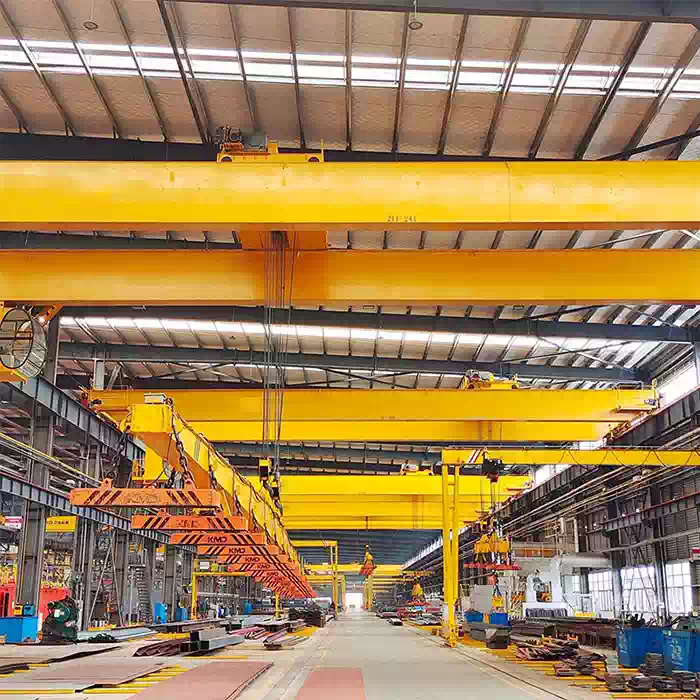
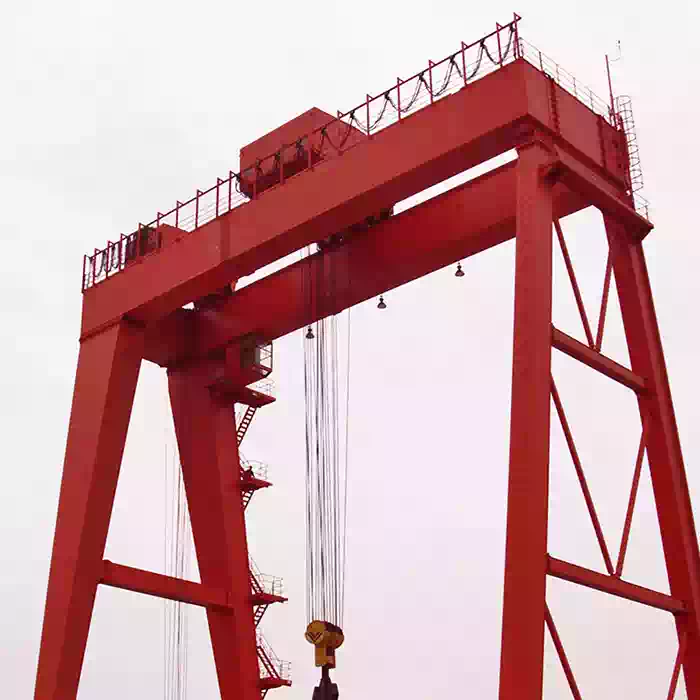
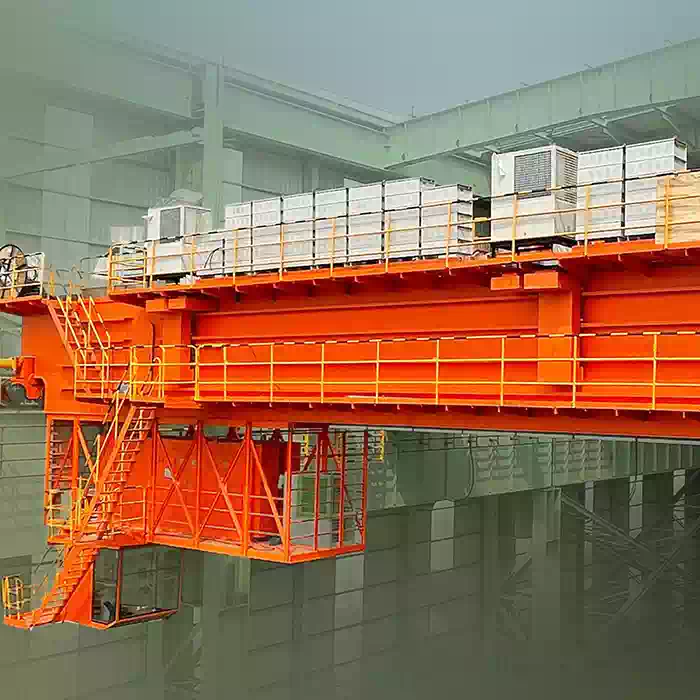
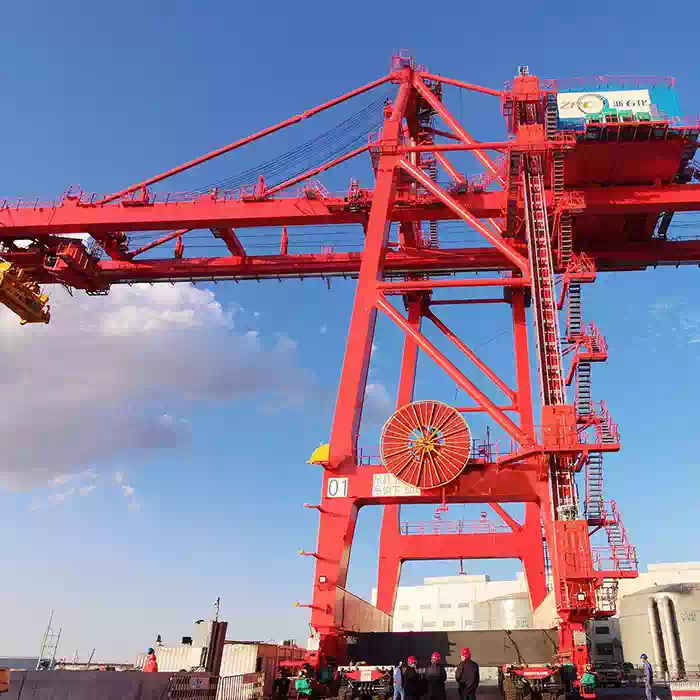
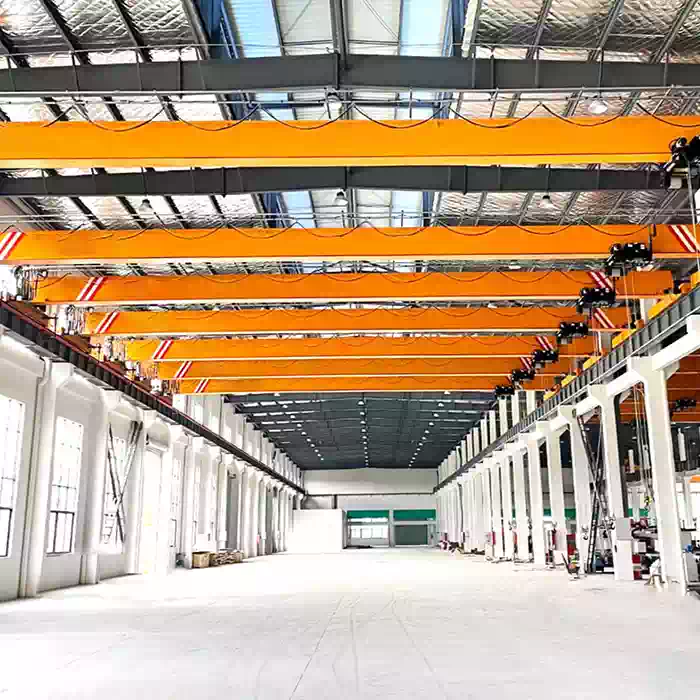
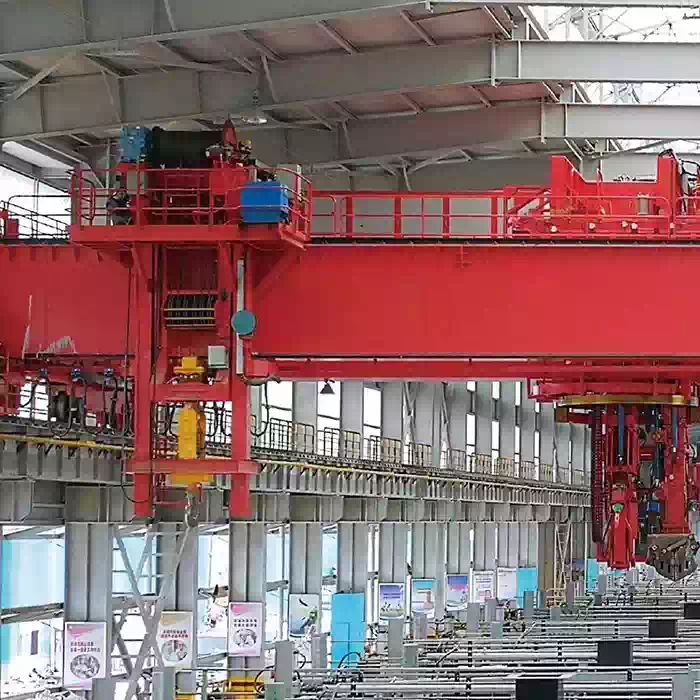
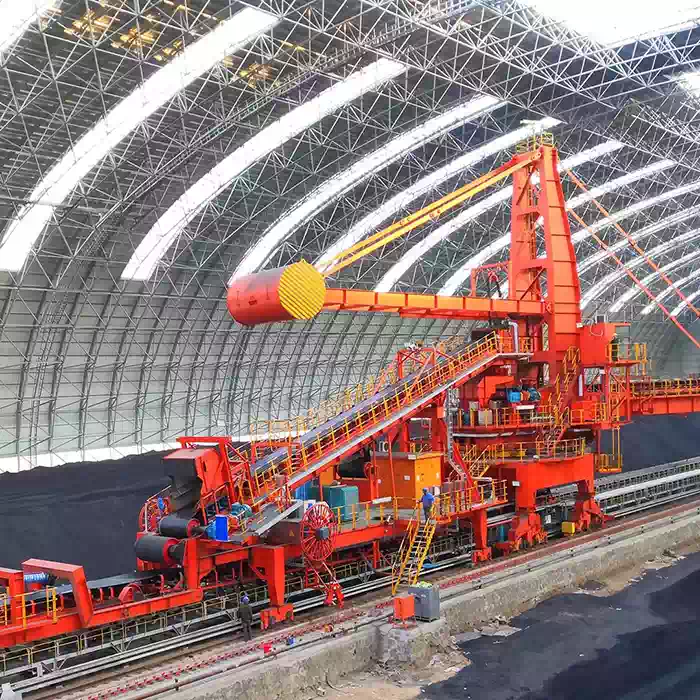
An overhead crane, also known as a bridge crane, is heavy-duty equipment used in industrial operations to handle materials and lift loads.
An overhead crane consists of a bridge, a long travel mechanism, a trolley travel mechanism, and a hoisting mechanism. Each component works together and plays an essential role in crane operation: the bridge travels along the runway, while the trolley moves across the bridge. The hoist raises and lowers the load.
What Are the Main Components of an Overhead Crane?
Bridge
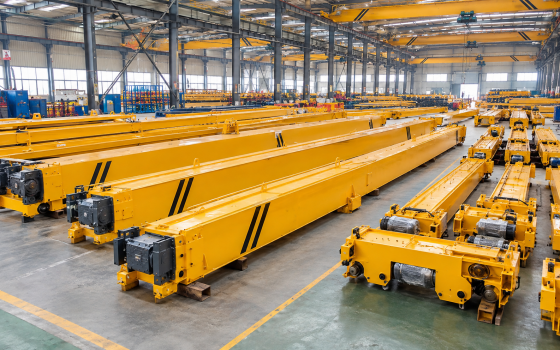
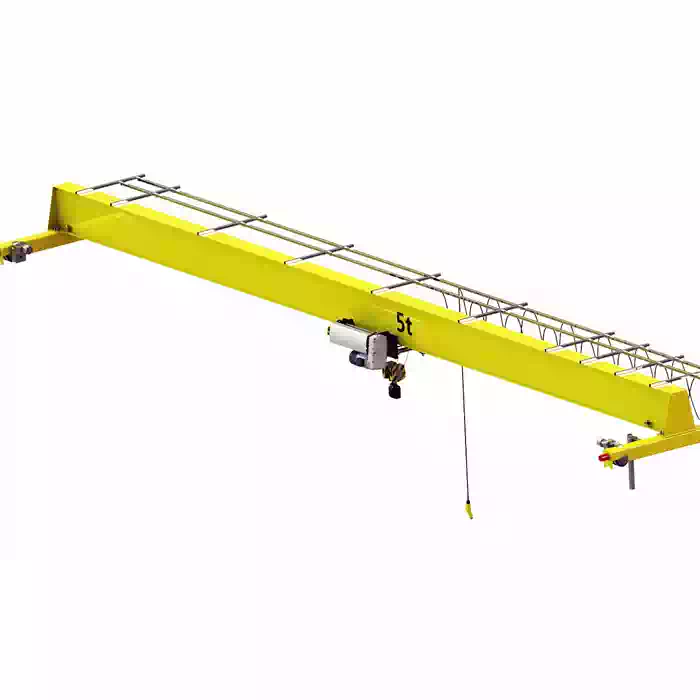
The bridge consists of the main girder and end carriages.
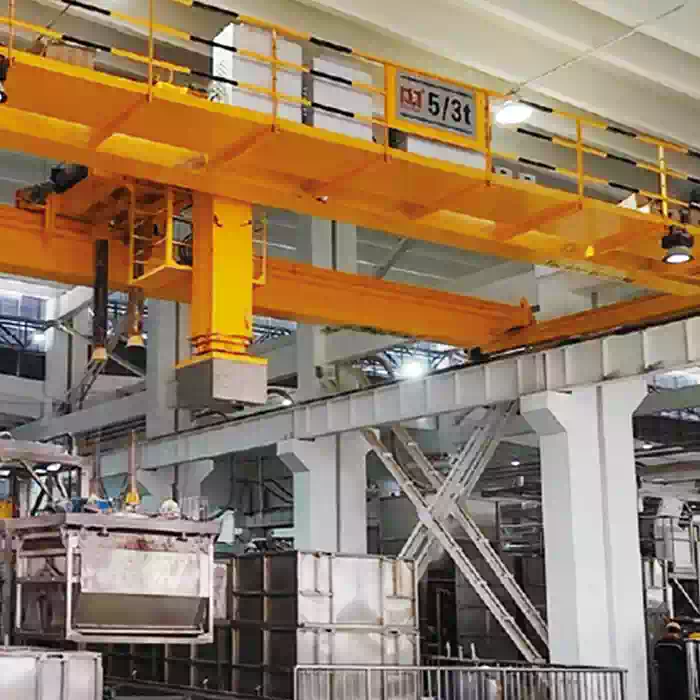
The main girder consists of one or two parallel beams above the working area. It provides the travel track for the trolley while also supporting the lifted load, the hoisting mechanism, and its own weight. If the rated lifting capacity is below 20 tons, a single-girder overhead crane can be used. If the rated lifting capacity exceeds 20 tons and a single girder is not sufficient to support the load, a double-girder overhead crane can be considered.
Of course, the main girder does not bear the entire weight of the crane on its own. The load is transferred through the end carriages to the runway rails or supporting structure of the building.
The end carriages are located at both ends of the main girder. They can be understood as the supporting and traveling components that connect the main girder to the building's runway rails.
In actual applications, the structure and dimensions of the end carriages need to match the building's runway rails, the crane span, and the operating conditions. If the two end carriages do not travel synchronously, the crane may run diagonally, which can lead to wheel wear and other problems. Therefore, the end carriages are not only important components connecting the main girder, but also play a key role in ensuring the smooth operation of the entire crane.
Trolley Travel Mechanism
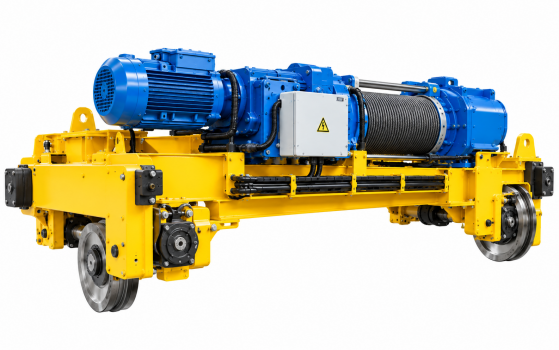
The trolley travel mechanism is the assembly that moves horizontally along the main girder. It is not simply a single component, but consists of a power source, brake, reducer, coupling, wheel assembly, and trolley frame.
If you are considering a traditional QD-type overhead crane, the trolley travel system is worth paying particular attention to. Traditional QD-type cranes usually use a relatively distributed trolley travel design. Power is transmitted through a drive shaft and couplings to the wheels on both sides, allowing the left and right drive wheels to travel synchronously. Because there are more mechanical transmission components, some parts require regular lubrication and inspection.
If you are considering a European-style overhead crane, you can pay more attention to the integrated design of its trolley travel mechanism. European-style cranes generally use a three-in-one drive system that integrates the motor, brake, and reducer into a more compact unit, reducing some intermediate transmission components. Some products also use enclosed, long-life lubrication, which can reduce routine lubrication and maintenance work.
Long Travel Mechanism
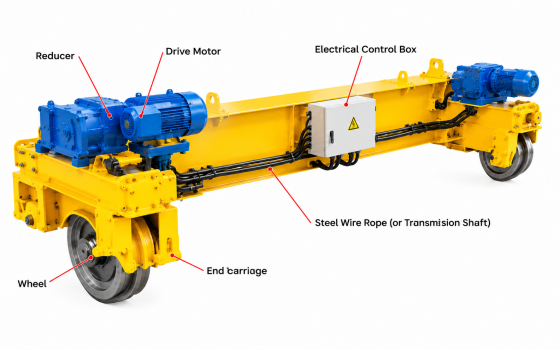
Unlike the trolley travel mechanism, the long travel mechanism is installed on the end carriages and moves longitudinally along the rails installed in the building.
It consists of drive motors, brakes, reducers, wheel assemblies, and transmission components. The wheels travel along the runway rails on both sides of the building, moving the entire crane forward and backward.
What Is the Difference Between the Long Travel and Trolley Travel Mechanisms?
Comparison |
Long Travel Mechanism |
Trolley Travel Mechanism |
Installation Position |
Installed on both end carriages |
Installed on the trolley frame |
Driven Components |
Moves the entire bridge, including the main girder, end carriages, trolley, and load |
Moves only the trolley frame, hoisting mechanism, and load |
Direction of Travel |
Along the length of the building |
Across the crane span |
Travel Rails |
Runway rails installed on the building's runway beams |
Trolley rails installed on the top of the main girder |
Load Supported |
Crane self-weight + lifted load; higher wheel loads can affect the building structure |
Trolley self-weight + lifted load; smaller load transferred to the main girder |
Drive Design |
Usually driven separately from both ends, requiring electrical synchronization between the two drive systems |
Traditional QD cranes commonly use centralized drive; European-style cranes generally use separate drives on both sides of the trolley |
Travel Distance |
Longer,generally corresponding to the total length of the runway |
Shorter,generally corresponding to the effective bridge span |
Travel Speed |
Relatively low, commonly 20–40 m/min |
Relatively faster, commonly 30–60 m/min |
Failure Risk |
Due to the large bridge span, poor synchronization can cause rail skewing |
The trolley frame is shorter, so the risk of rail skewing is relatively lower |
Limit Protection |
Prevents the bridge from traveling beyond the ends of the building runway rails |
Prevents the trolley from hitting the inner side of the end carriage |
Size Requirements |
Drive units have higher load-bearing requirements and are generally larger |
Drive units are more compact and lightweight; European-style three-in-one drives are more compact |
Hoisting Mechanism
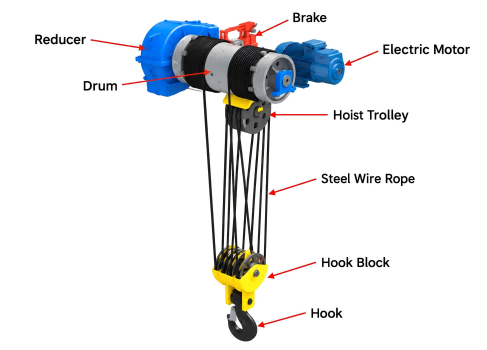
In addition to the trolley travel mechanism, the trolley frame also carries the hoisting mechanism.
You can understand it this way: the trolley travel mechanism is responsible for moving the load horizontally, while the hoisting mechanism is responsible for raising and lowering the load after it has been lifted.
During operation, the motor provides power. The reducer lowers the rotational speed and increases the torque, driving the drum to rotate. As the drum winds or unwinds the wire rope, the load can be raised or lowered.
How Does an Overhead Crane Work?
The Hoist Lifts and Lowers the Load
When the operator starts the hoisting mechanism, the motor begins to provide power and drives the drum through the reducer.
As the drum rotates, the wire rope is wound around the drum one turn at a time, causing the hook to move upward and eventually lift the load from the ground.
For actual crane selection, a higher lifting speed is not always better. When precision equipment, steel materials, or large machinery is being handled, smooth lifting and lowering are often more important than simply pursuing higher speed.
Therefore, lifting speed, lifting height, rated capacity, and working class all need to be selected according to the actual operating conditions.
The Trolley Moves the Load Across the Bridge
When the operator starts the trolley travel mechanism, the motor begins to run and drives the wheels along the rails on the main girder through the transmission system.
As the trolley moves, the hoisting mechanism installed on it moves together. This allows the hook and load to be positioned at the required location along the main girder.
When the equipment is powered off or stopped, the brake engages quickly and stops the trolley, helping to reduce the risk of unintended movement and load swinging.
The Bridge Moves the Load Along the Runway
When the operator starts the long travel mechanism, the drive motor begins to run and drives the wheels along the runway rails on both sides of the building through the transmission system.
Because the main girder and end carriages are connected as one structure, the entire bridge moves as the wheels travel. The trolley, hoisting mechanism, and suspended load installed on the main girder move together, allowing the load to be transported farther along the building.
Unlike the trolley travel mechanism, which is responsible for horizontal movement across the bridge, the long travel mechanism moves the entire overhead crane forward and backward.
When the crane stops traveling, the brakes act on the travel mechanism to keep the bridge stable at the required position.
Therefore, the length of the building's runway directly affects the crane's travel range, while the parallelism and installation accuracy of the rails also affect how smoothly the crane operates.
How Do the Three Movements Work Together?
An overhead crane completes a lifting and handling operation through the combined operation of the hoisting mechanism, trolley, and bridge.
The hoisting mechanism raises or lowers the load, the trolley travel mechanism moves the load across the main girder, and the long travel mechanism moves the entire bridge along the building's runway rails. Together, these three movements allow the crane to move flexibly throughout the working area and improve handling efficiency.
Simply put, an overhead crane combines three directions of movement — up and down, left and right, and forward and backward — to create a three-dimensional handling range within the building.
How Do the Drive and Control Systems Work?
Every movement of an overhead crane depends on its drive and control systems.
The operator sends commands through a pendant control, wireless remote control, or operator's cab. The control system transmits these commands to the corresponding motor, which drives the hoisting mechanism, trolley travel mechanism, or long travel mechanism to perform the required movement.
The reducer adjusts rotational speed and torque, while the brake allows the equipment to stop quickly and smoothly when required.
For cranes that operate frequently, variable frequency drive (VFD) control is also a configuration worth considering. By controlling motor starting, acceleration, and deceleration, sudden starts and stops can be reduced, which helps minimize mechanical impact and allows the suspended load to move more smoothly.
For applications that require precise positioning, travel speed and the control method are particularly important.
How Is an Overhead Crane Maintained and Kept Safe?
After long-term operation, components such as the wire rope, hook, brakes, wheels, rails, and limit devices will experience different levels of wear. Therefore, regular inspection and maintenance are necessary.
Lubrication points should also be maintained according to the equipment manufacturer's requirements, especially for cranes that are used frequently or operate in harsh environments.
During daily inspections, operators should not only look for visible damage but also pay attention to abnormal noise, unstable movement, changes in braking distance, and wire rope wear.
If an abnormal condition is found, the crane should be stopped and inspected promptly rather than continuing to operate until a failure occurs.
Proper preventive maintenance can help reduce unexpected downtime and extend the service life of the equipment.
How to Choose the Right Overhead Crane?
If you are planning to purchase an overhead crane, it is not enough to simply understand how it works. You also need to provide the designer with details about your actual requirements, such as:
Factor to Consider |
Main Question It Answers |
Rated Capacity |
How much weight needs to be lifted? |
Span |
How wide is the building? |
Lifting Height |
How high does the load need to be lifted? |
Working Class |
How many times will the crane be used each day? |
Travel Speed |
How quickly does the load need to be moved? |
Working Environment |
Will the crane operate indoors, outdoors, in high temperatures, or in a dusty environment? |
Conclusion
After years of development, research, and practical experience, overhead crane design and operation have become highly developed and can be customized according to different customer requirements.
Having a clear understanding of how an overhead crane works can help you better evaluate your requirements and select a suitable crane for your application.


