

There may be a misconception that "a double girder gantry crane is always better than a single girder gantry crane." However, both crane types are highly effective solutions. Choosing the right gantry crane depends entirely on your specific operational conditions and lifting requirements. This guide provides a detailed comparison between single girder and double girder gantry cranes to help you make an informed decision.
What Is a Single Girder Gantry Crane?
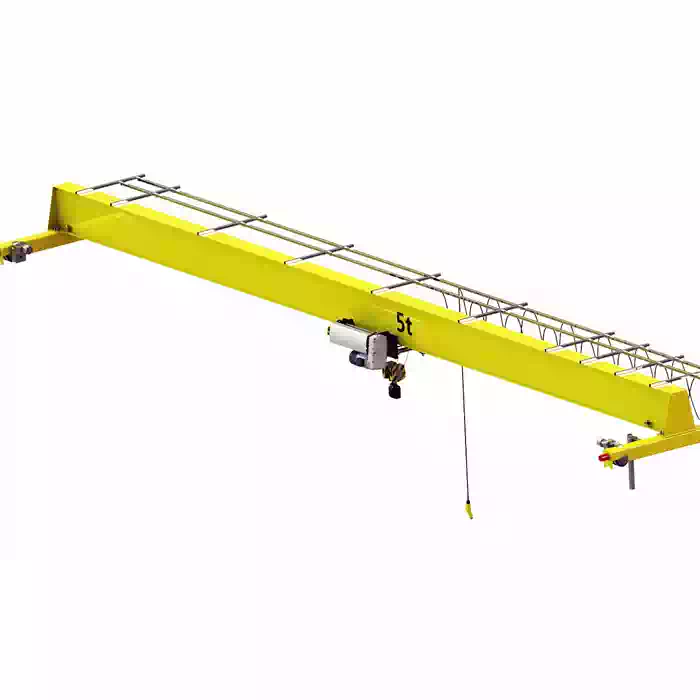
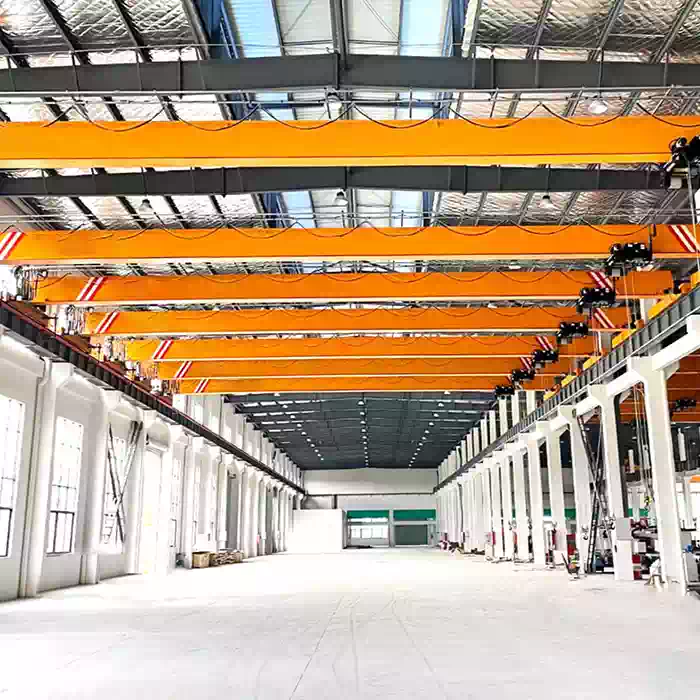
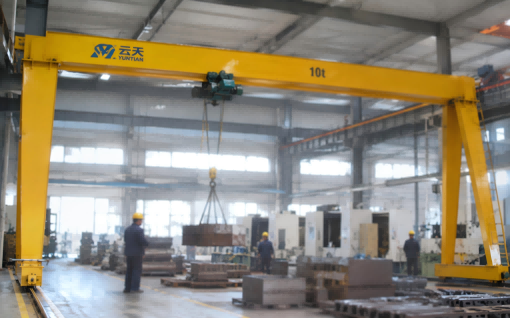
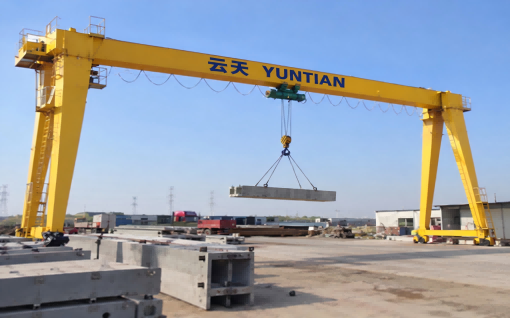
A single girder gantry crane consists of a single main girder supported by two A-frame legs, with an electric hoist or trolley running along the underside of the main girder.
Features of Single Girder Gantry Cranes
Lightweight Structure
For a single girder gantry crane, the main girder must handle the load capacity, account for deflection across longer spans, and maintain overall stability during crane operation. Therefore, the girder cross-section, steel plate thickness, and structural layout are precisely engineered based on rated lifting capacity, span, and duty class to minimize dead weight and unnecessary steel consumption.
Easy Installation and Maintenance
With only one main girder and a centralized hoist mechanism, a single girder gantry crane is easier to install compared to a double girder model. Routine inspection and maintenance are straightforward because fewer structural components need checking. In case of issues, operators can systematically troubleshoot the electric hoist, crane traveling mechanism, electrical control system, and connection points. The actual maintenance complexity depends on equipment configuration, service space, and fault type.
Space-Saving Design
Simple main girder structure for easy dimensional control
Compact hoisting mechanism that maximizes usable working area
Customizable design parameters (span, lifting height, capacity, support leg layout, and travel path) for space-constrained sites
Lower Manufacturing and Transportation Costs
While lower costs do not mean a single girder gantry crane is always cheaper, under similar conditions—such as rated capacity, span, lifting height, and duty class—the single girder design uses less steel and weighs less, resulting in lower manufacturing and shipping costs. Actual cost savings depend on specific structural engineering, crane options, and logistics constraints.
Applications of Single Girder Gantry Cranes
What Is a Double Girder Gantry Crane?
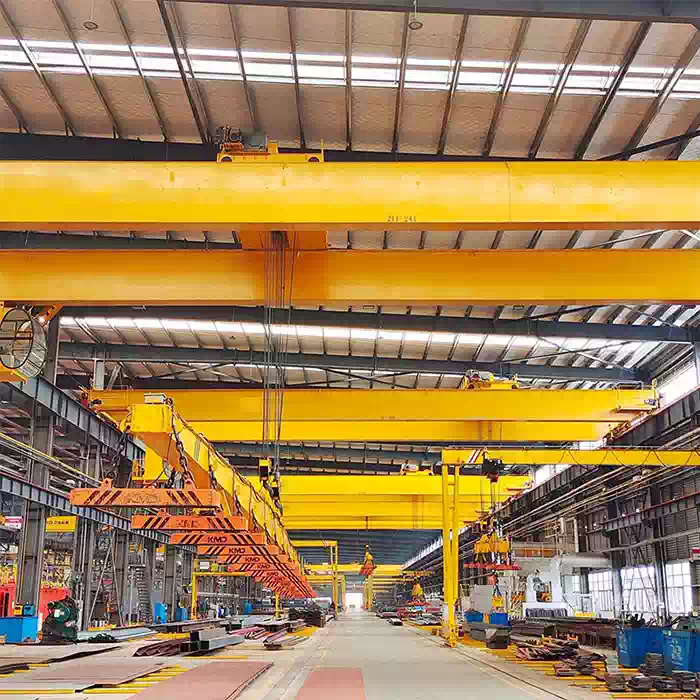
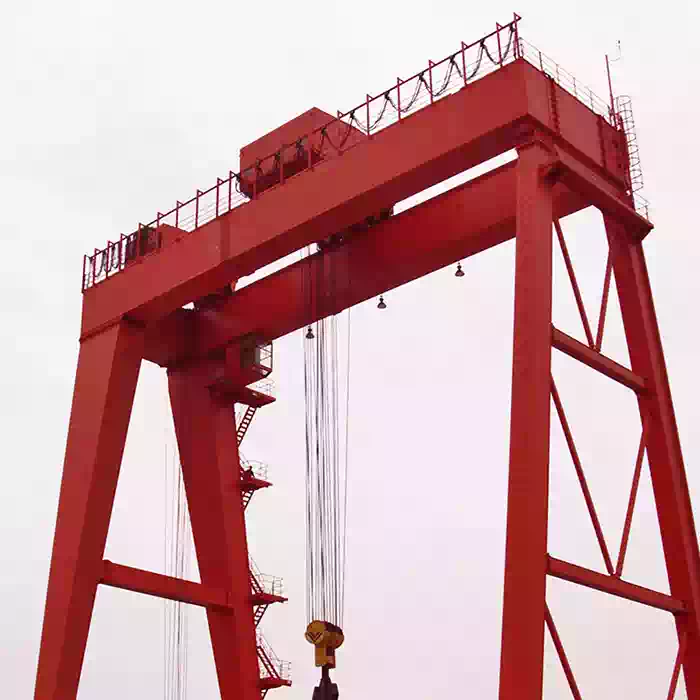
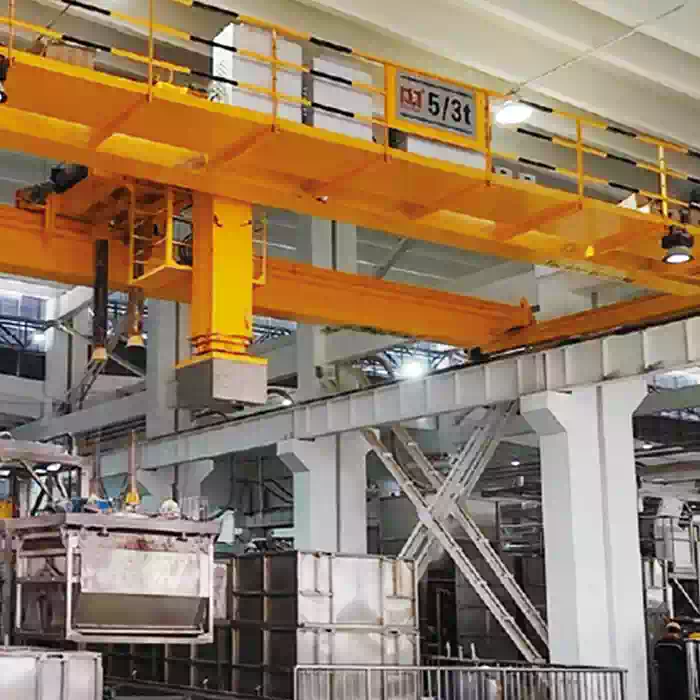
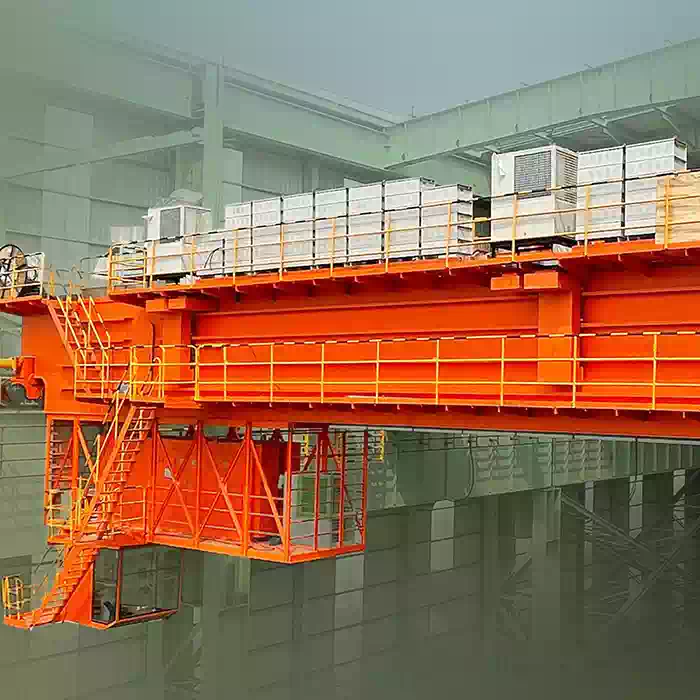
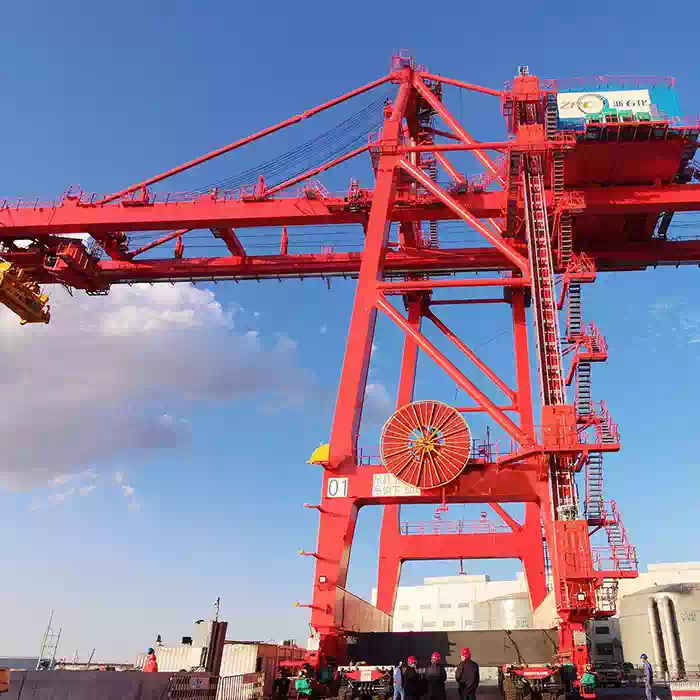
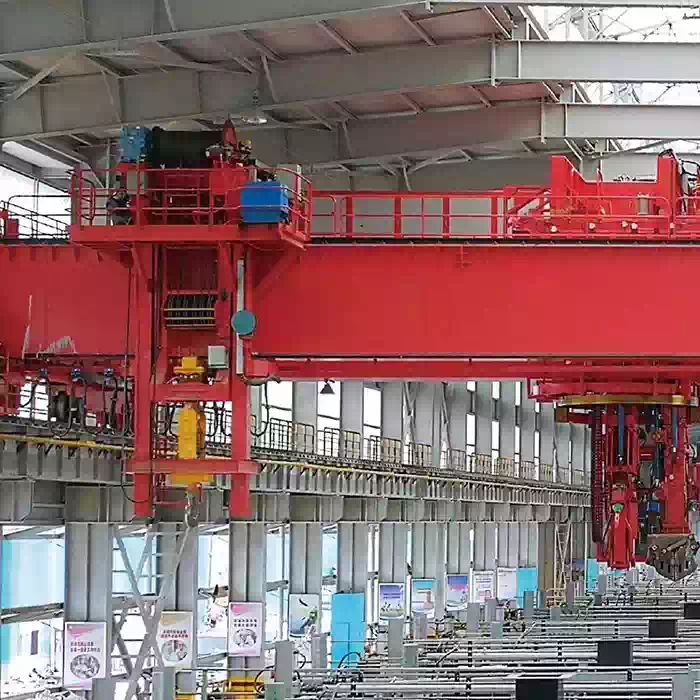
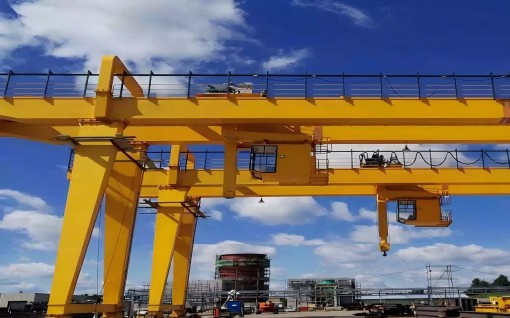
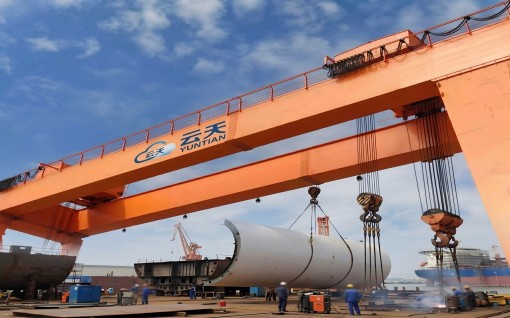
A double girder gantry crane consists of two main girders, a heavy-duty crab/trolley, trolley traveling mechanisms, an operator cabin, and an electrical control system. The dual-girder design offers greater flexibility for customized spans, higher load capacities, and demanding duty cycles.
Features of Double Girder Gantry Cranes
Higher Lifting Capacity and Superior Structural Stability
In a double girder gantry crane, the load is distributed across two main girders, providing significantly higher lifting capacity than a single girder crane. However, actual load limits still depend on main girder cross-sections, steel grade, span, and overall structural design.
The rigid box frame—formed by two main girders, top rails, and end carriages—creates a closed rectangular structure. This design effectively resists torsional stress during eccentric loading. Overall torsional resistance and traveling stability are further enhanced by girder profiles, connection integrity, leg rigidity, and variable-frequency drive controls.
Greater Span Adaptability
When lifting heavy loads, main girders undergo deflection. Larger spans naturally increase vertical deflection. To maintain optimal deflection ratios, double girder gantry cranes utilize optimized girder profiles and structural bracing. Final deflection performance depends on custom engineering rather than girder count alone.
Increased Effective Lifting Height
The crab trolley on a double girder gantry crane runs on top of the main girders. Compared to single girder cranes with underslung electric hoists, this top-running trolley configuration maximizes hook height. Double girder designs are ideal for facilities with limited vertical headroom, though final hook coverage depends on girder height, trolley dimensions, upper limit switches, and site clearance.
Longer Service Life in Heavy-Duty Operations
When a gantry crane must handle heavy loads under continuous operational cycles, structural durability and component duty ratings become critical. Double girder gantry cranes easily meet high duty classification requirements. Long-term service life ultimately depends on proper duty class selection, manufacturing quality, component specifications, operator handling, and preventive maintenance.
Applications of Double Girder Gantry Cranes
Single Girder vs. Double Girder Gantry Crane: What Are the Main Differences?
Comparison Item |
Single Girder Gantry Crane |
Double Girder Gantry Crane |
Dead Weight |
~60%–85% of double girder models under similar specs |
~1.2–1.7x heavier than single girder models |
Rated Lifting Capacity |
1-20t |
10-800t |
Crane Travel Speed (Bridge / Trolley / Hoist) |
20–40 m/min 10–30 m/min 3–8 m/min |
20–40 m/min 10–40 m/min 3–10 m/min |
Span |
≤22.5m |
10–35 m |
Crab / Trolley Type |
Electric hoist or single-girder trolley (underslung or top rail) |
Heavy-duty winch trolley (running on top or between dual girders) |
Installation & On-Site Workload |
Simple structure; lower on-site assembly workload |
Complex structure and trolley setup; higher installation requirements |
Purchasing Cost |
~15%–30% lower than comparable double girder models |
Higher initial investment, especially for high capacities/heights |
Transportation Cost |
Fewer components and lighter weight reduce freight costs |
Oversized girders may require heavy transport and special permits |
Manufacturing Cost |
Lower steel consumption and fabrication labor |
Higher steel tonnage, welding, and assembly costs |
Duty Class (ISO/FEM) |
A1~A5 |
A3~A8 |
Routine Maintenance |
Straightforward and low-cost |
Requires detailed inspection of complex mechanisms |
Lifting Height |
Standard / Moderate |
Higher effective lifting height |
How to Choose the Right Single Girder or Double Girder Gantry Crane?
Evaluate the Required Lifting Capacity
Single girder gantry cranes are ideal for light-to-medium duty lifting, while double girder gantry cranes excel at heavy-duty material handling.
Do not select a crane based solely on average load weight. For example, if daily loads are 8 tons but occasional mold handling requires 16 tons, the crane must be rated for the maximum load demand.
When calculating rated capacity, account for maximum load weight, rigging/lifting attachment weight, and potential future expansion. A qualified crane manufacturer will verify structural loads before finalizing the design.
Consider the Span, Lifting Height, and Available Space
Large Spans & High Lifting Heights: A double girder gantry crane should be the primary consideration.
Moderate Spans & Space Limitations: A single girder gantry crane is often the preferred choice.
Before requesting a quote, confirm the following site parameters:
Span: What is the total width of the working area covered by the crane?
Lifting Height: How high must loads be raised, and do they need to clear machinery or obstacles?
Headroom Clearance: What is the distance from the rail line or floor to overhead obstructions or structural ceilings?
Site Constraints: Are there building columns, piping, equipment, or traffic bays in the travel zone?
Match the Crane to the Duty Class and Operating Frequency
Two gantry cranes lifting the same 20-ton steel coil may require completely different duty classes if one operates occasionally while the other runs continuously across multiple shifts.
Always specify daily operating hours, cycle frequency, average load factors, and maximum load percentages to your crane supplier.
Note that double girder construction does not automatically equate to a higher duty class. Both single girder and double girder gantry cranes can be custom-engineered to meet specific ISO/FEM duty classifications.
Compare Initial Investment and Long-Term Operating Costs
Single girder gantry cranes offer lower dead weight, simplified maintenance, and reduced freight expense. Under equivalent capacity and span conditions, initial capital expenditure is lower than for double girder models.
It is recommended to request technical and commercial proposals for both single girder and double girder options to perform a complete total-cost-of-ownership (TCO) analysis.
Work with a Crane Manufacturer for a Customized Solution
Before finalizing your choice, provide the crane manufacturer with the following technical parameters:
1.Rated lifting capacity and maximum peak load weight.
2.Required span, lifting height, and available overhead clearance.
3.Desired crane travel, trolley travel, and hoisting speeds.
4.Daily operating hours and expected duty cycles.
5.Indoor or outdoor installation environment.
6.Rail foundation, ground conditions, shipping access, and installation logistics.
7.Target budget and future expansion plans.
Conclusion
Selecting between a single girder and a double girder gantry crane requires looking beyond rated capacity or initial purchase price. Load weight, span, hook height, duty classification, operating frequency, and site conditions must all be thoroughly evaluated.
For light-to-medium loads, moderate duty cycles, and cost-conscious projects, a single girder gantry crane is typically the most economical solution. For heavy tonnage, maximum hook height, and continuous high-frequency lifting, a double girder gantry crane provides the necessary structural rigidity and long-term durability.
Consult a professional gantry crane manufacturer to calculate load parameters, evaluate structural engineering options, and assess life-cycle costs to select the ideal gantry crane for your facility.


