
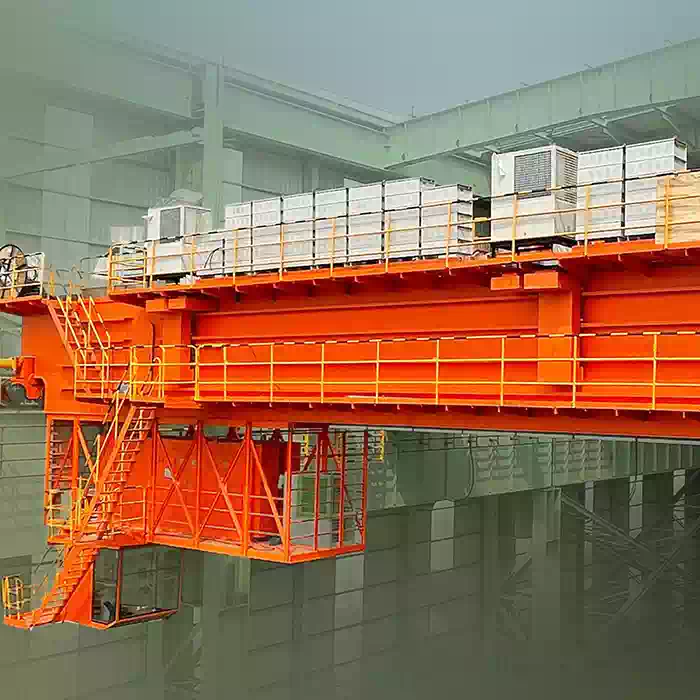
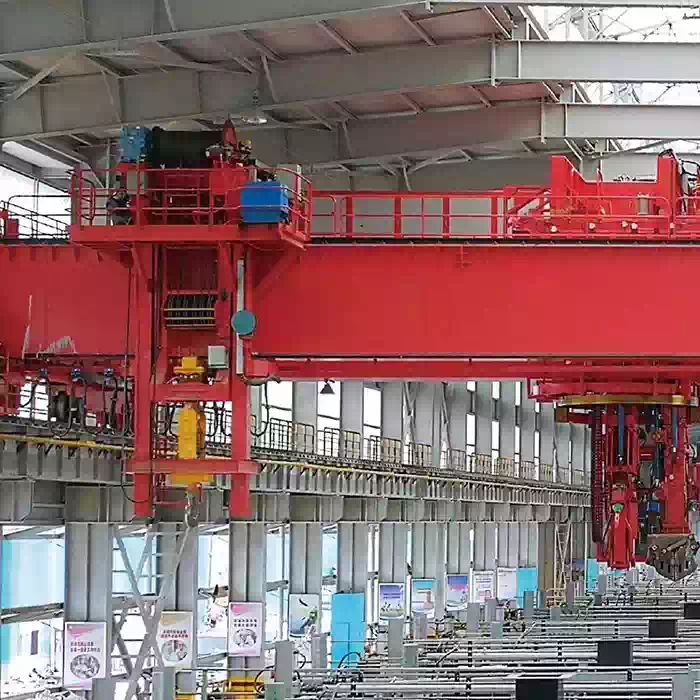
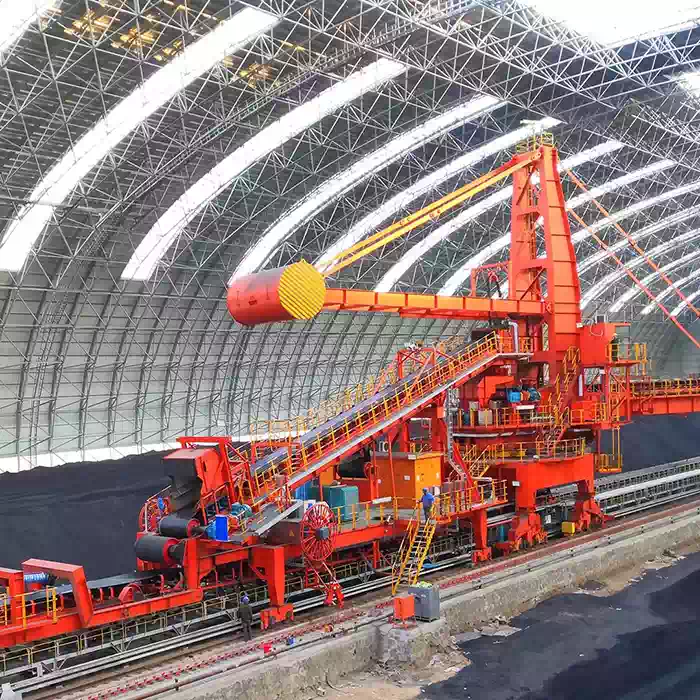

The previous two articles discussed overhead cranes and gantry cranes, but what exactly is a semi-gantry crane? A semi-gantry crane is a material handling equipment that falls between an overhead crane and a gantry crane.
It has a special supporting design: one end is supported by an overhead rail installed on the workshop or another building structure, similar to an overhead crane; the other end is supported by a leg running on a ground rail, similar to a gantry crane. The crane bridge, trolley travel mechanism, and lifting mechanism work together to lift and move loads horizontally.
This special design allows the crane to make use of existing building structures while reducing the space occupied by ground support structures on one side. Therefore, for workplaces with limited floor space, suitable building support conditions, or a need to make full use of existing workshop space, this type of crane can provide a flexible lifting solution.
This article will discuss its features, advantages, applications, and selection methods in detail, helping you better understand this specially designed lifting equipment and determine whether it is suitable for your workplace.
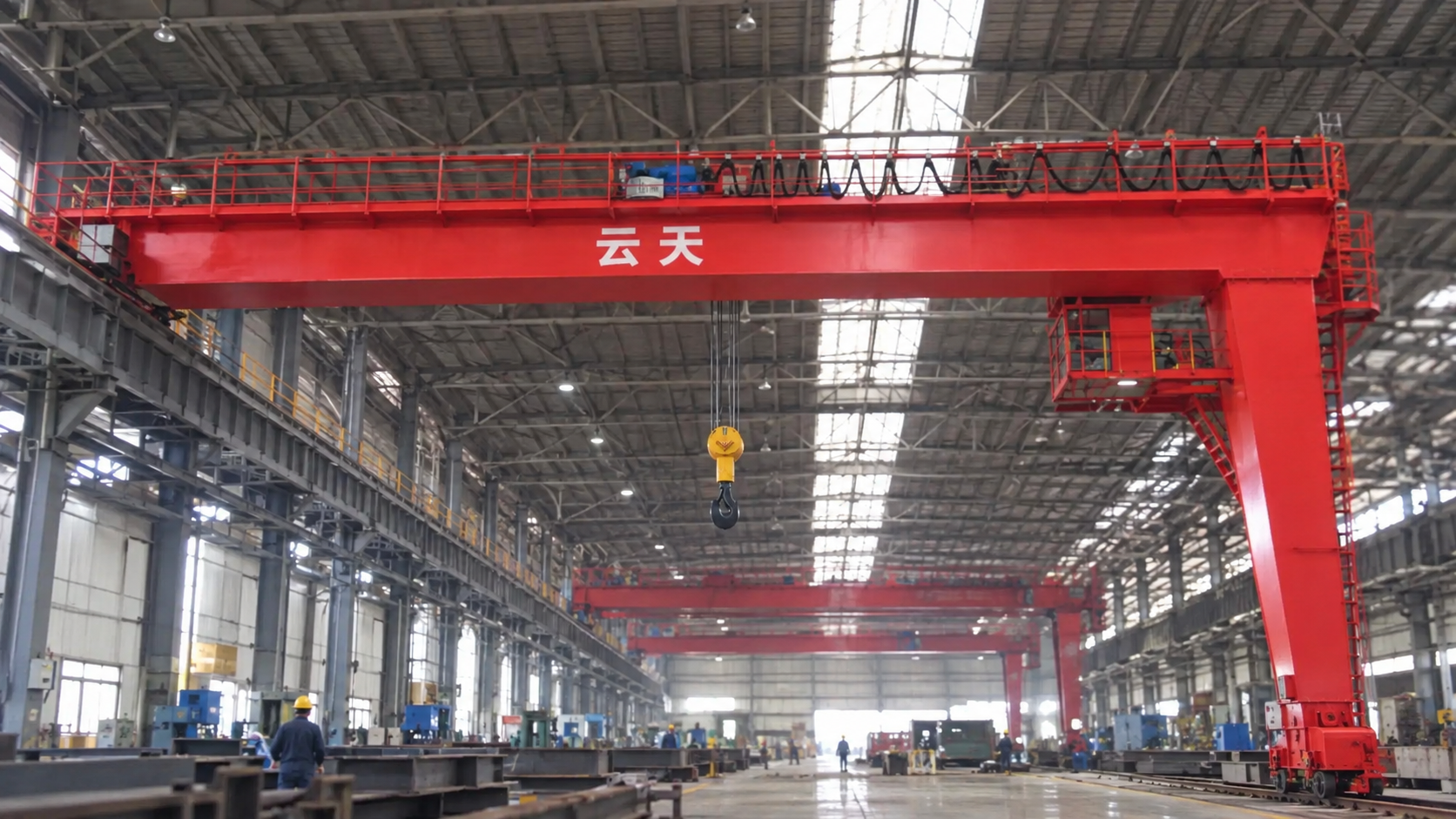
How Is a Semi-Gantry Crane Different From Other Crane Types?
Semi-Gantry Crane vs. Overhead Crane
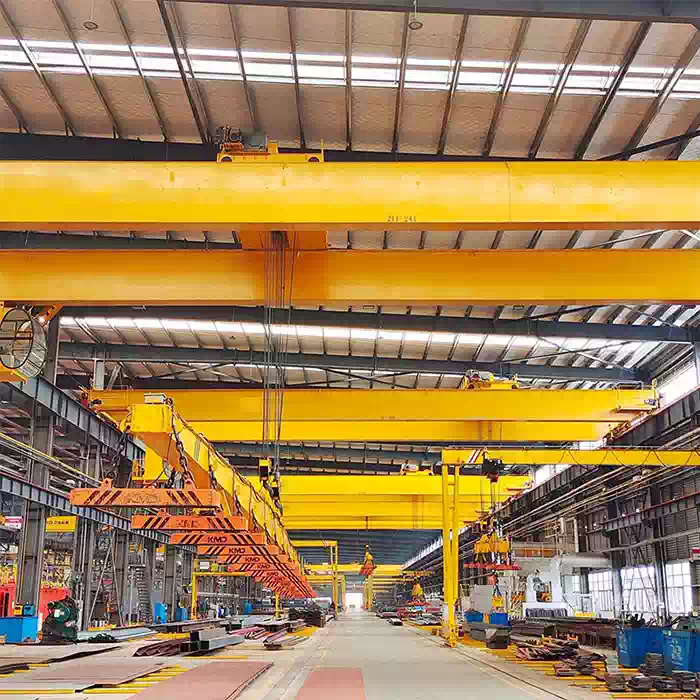
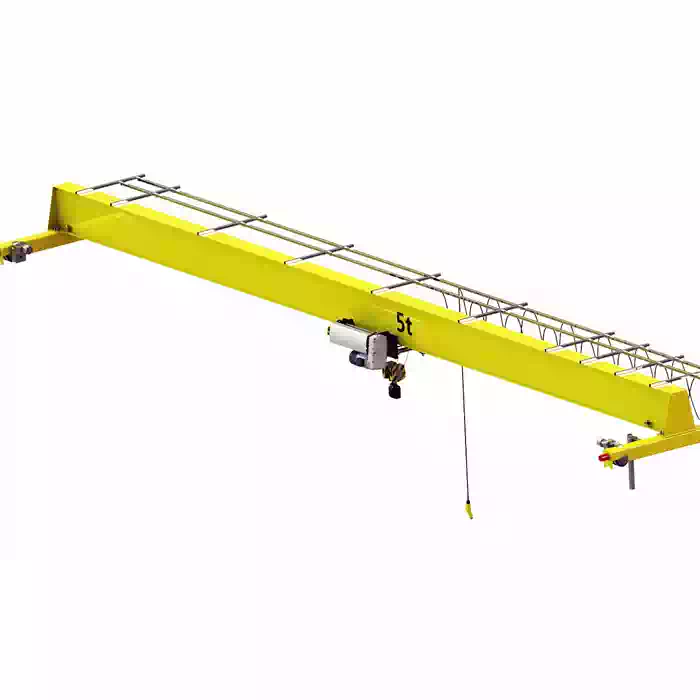
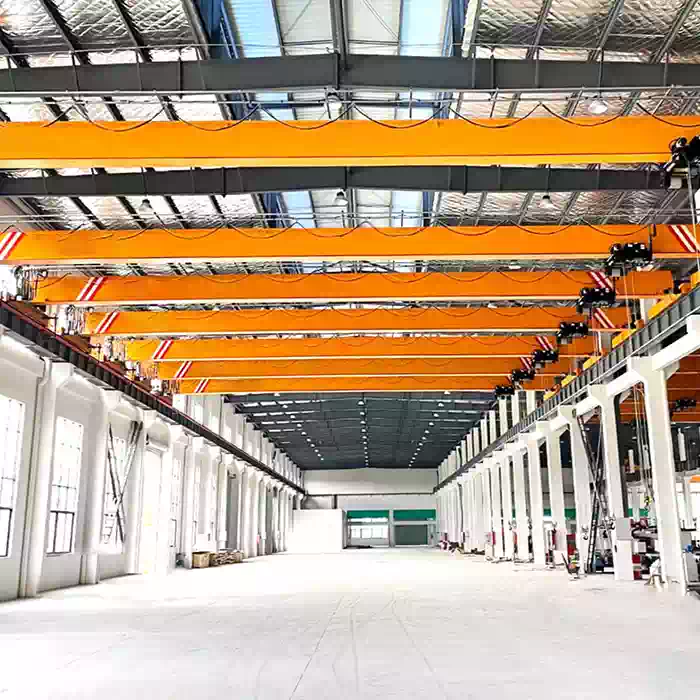
An overhead crane mainly consists of the main girder, end carriages, bridge travel mechanism, trolley travel mechanism, and lifting mechanism.
The load generated during lifting is transferred through the lifting mechanism, trolley, main girder, and end carriages to the workshop rails, and is then supported by the building structure. The two end carriages are connected to the main girder and supported by wheels on the overhead rails on both sides of the workshop through the bridge travel mechanism.
Therefore, the main structure of an overhead crane is suspended above the working area of the workshop and does not require supporting legs on the ground.
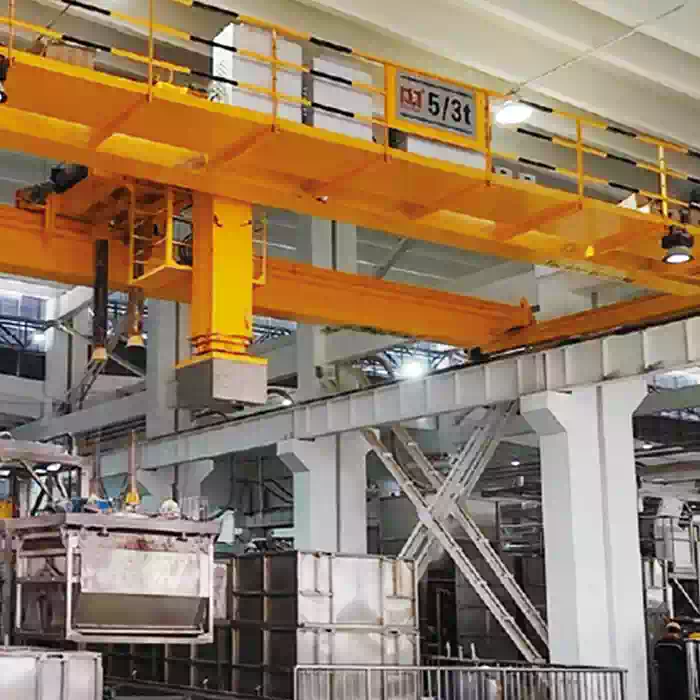
A semi-gantry crane adopts a more flexible supporting design on this basis: it retains the main girder and one end carriage, while the other side is supported by a leg and travel mechanism running on a ground rail.
Compared with a conventional overhead crane, the additional leg is not simply used to increase load capacity. Instead, it changes the supporting method, allowing the crane to operate without complete overhead rails on both sides. The practical benefit is that less dependence is placed on the workshop building structure. This is particularly useful where suitable building structures are available on one side of the workshop but installing an overhead rail on the other side is difficult.
Semi-Gantry Crane vs. Full Gantry Crane
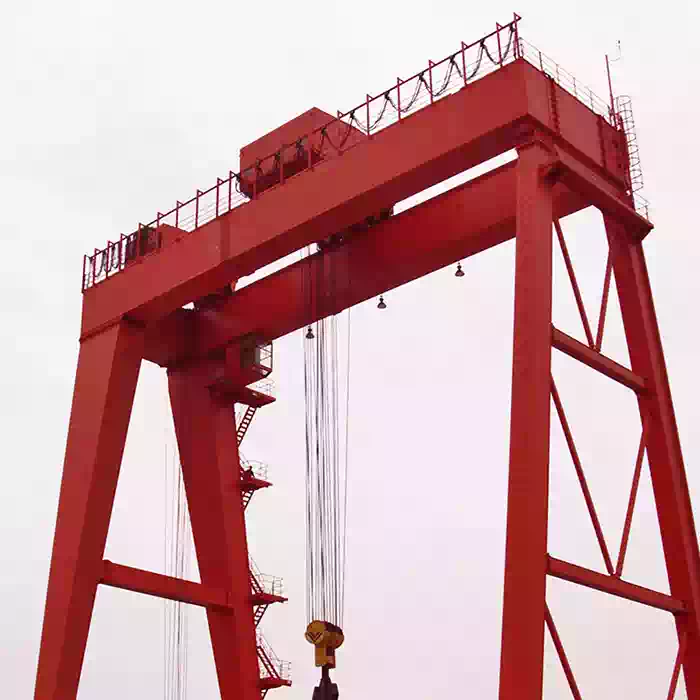
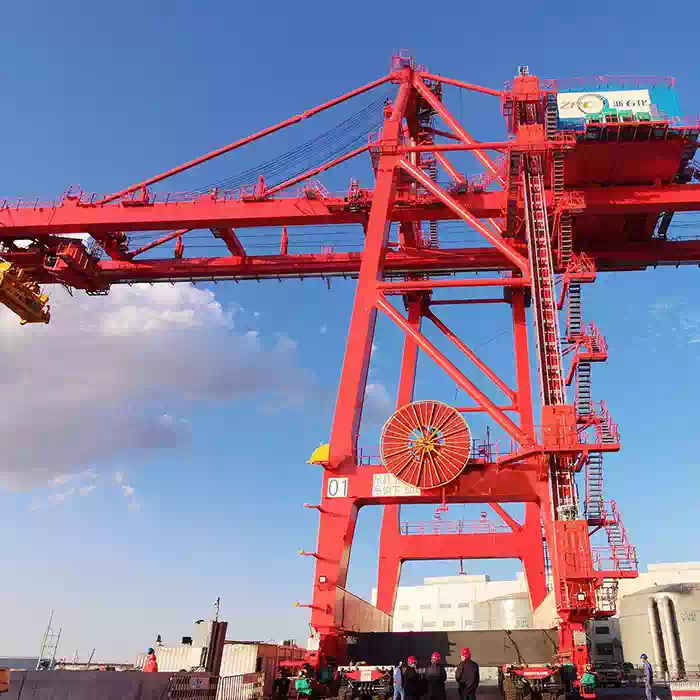
Structurally, a gantry crane looks like a “door” shape, with two legs supporting the main girder above. The two legs are supported by wheels on ground rails through the bridge travel mechanism, allowing the entire crane to travel along the rails.
The loads generated during lifting, together with the self-weight of the crane, are transferred through the main girder, legs, and travel mechanism to the ground rails and foundation.
Unlike a full gantry crane, a semi-gantry crane uses legs and ground rails for support on only one side, while the other side is supported by the end carriage and travel mechanism on the overhead rail of the workshop.
This special supporting arrangement allows the equipment to make use of the existing overhead structure while reducing the floor space occupied by one side of the ground legs and travel structure. If the workshop already has suitable overhead rails and the floor area needs to accommodate production lines, vehicle routes, or other equipment, this arrangement may fit the existing layout more easily.
However, this does not mean that a semi-gantry crane will always cost less than a full gantry crane. Since one side depends on the building structure and overhead rail for support, the building structure, rail conditions, and connection points must be evaluated during design. The final cost needs to be determined based on the specific site conditions and crane configuration.
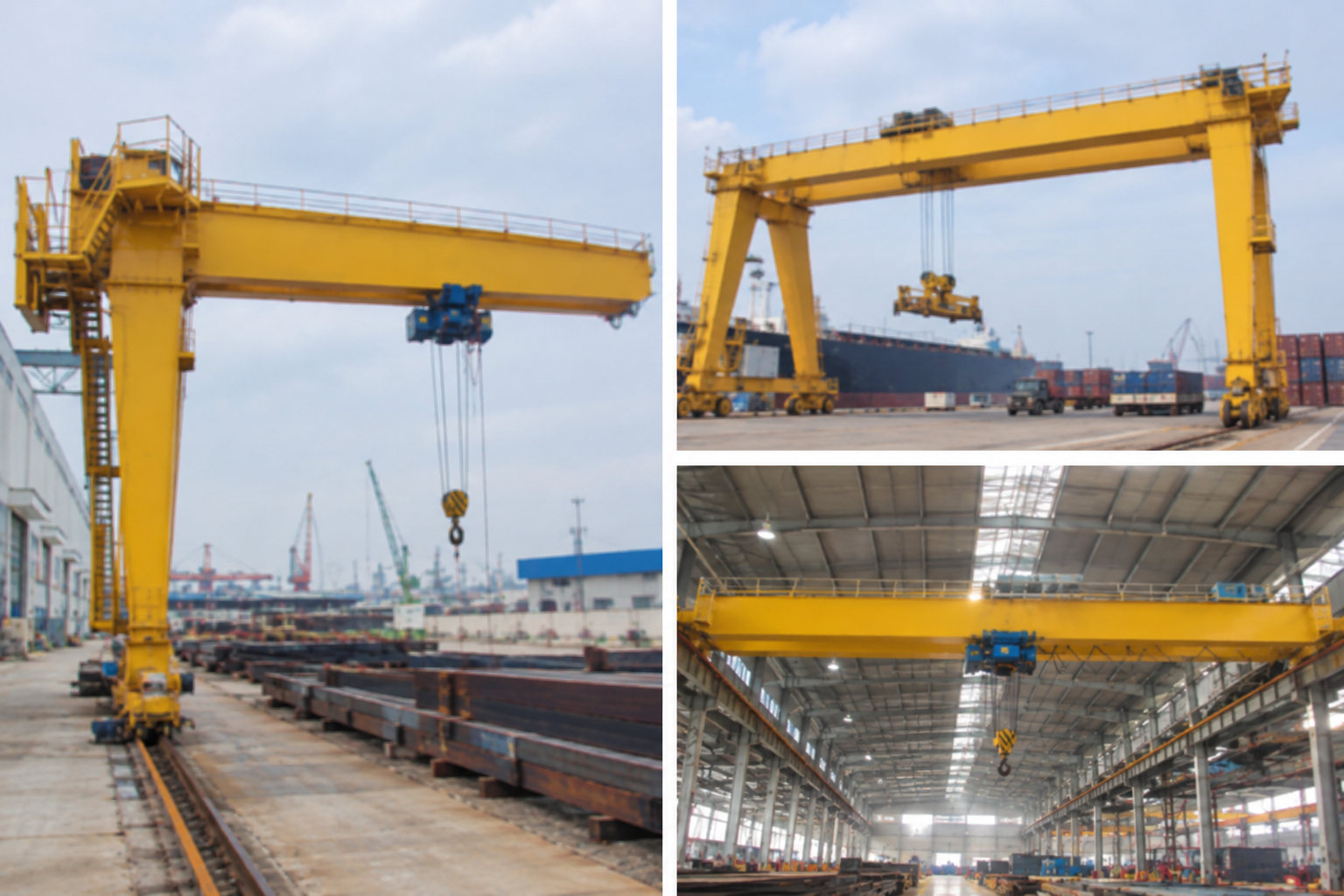
Key Features of a Semi-Gantry Crane
Saves Floor Space
Only one side is supported by a leg reaching the ground, while the other side uses the overhead rail of the workshop for support. In other words, compared with a full gantry crane, this design can reduce the floor space occupied by the equipment.
A full gantry crane generally requires about 2 meters of rail width on one side. Therefore, the semi-gantry arrangement can free up a passage about 2 meters wide, which can be used for forklifts, production equipment, temporary material storage, or personnel access.
Easier Installation and Greater Flexibility for Future Changes
Compared with a full gantry crane, which requires two legs, ground rails, and related facilities, only one leg and one ground rail are required here.
If production lines are added, equipment positions are changed, or material transportation routes are adjusted in the future, the main transportation routes can be avoided during the initial design stage, leaving space for future changes in the production layout.
Of course, if the rail position, leg position, or overhead connection structure needs to be changed, the structure and rail conditions still need to be reassessed. These components cannot simply be moved after installation.
Make Full Use of Existing Building Structures
If the workshop already has overhead rails, columns, or other suitable supporting structures, these structures can be used to support one side of the crane, eliminating the need for an additional ground leg on that side.
If there is no existing overhead rail or load-bearing column, but a site assessment confirms that the wall structure can support the relevant crane loads, new supporting columns can also be designed according to the building structure, with an overhead rail installed on top.
In this way, the crane can still adopt a “one side overhead, one side ground-supported” arrangement.
Saves Costs
Saves Material Costs
Based on previous project quotations and material lists, the steel cost can be reduced by around 20%–40% because one supporting leg is eliminated compared with a full gantry crane.
When the lifting capacity, span, and duty class are similar, the semi-gantry arrangement may have a certain cost advantage in terms of structural materials. This does not necessarily mean that the final equipment price will be reduced, but it can help lower the overall material cost.
Saves Transportation Costs
Based on transportation experience from previous projects, when the lifting capacity, span, and duty class are similar, having one less supporting leg can reduce some of the costs associated with transporting, loading and unloading, and moving steel structures on site.
However, the final transportation cost still needs to be considered together with the component dimensions, transportation distance, and local transportation restrictions.
Saves Building Modification and Installation Costs
If the workshop or building already has overhead supporting structures or columns, some site work may be reduced, such as the addition of overhead structures, column modifications, local reinforcement, and rail support structures. This can reduce the cost of installing additional supporting columns.
Since only one supporting leg is required, compared with a full gantry crane, some costs related to rail installation, foundation construction, leg installation, alignment and commissioning, and on-site labor can also be reduced.
Where Are Semi-Gantry Cranes Used?
The application of this type of crane should not be determined simply by industry. Three necessary conditions should also be considered.
Stable Building Structure with Suitable Conditions for Overhead Support
An overhead support needs to be installed on the building to support one side of the main girder and the loads generated during crane operation.
Therefore, the building structure must be stable enough. The load-bearing columns and beams, rail installation positions, and connection points should be inspected and evaluated on site by the design team.
Narrow Workshop Passages with Many Columns, but Suitable Overhead Support on One Side
In this situation, a full gantry crane may occupy more floor space and affect the movement of personnel and materials.
With a semi-gantry arrangement, one side can make use of the existing overhead rail or supporting structure of the workshop, while a leg can be installed on the other side.
Therefore, for workplaces with limited space and dense equipment layouts, this solution can generally fit into the existing layout more easily, provided that the structural load-bearing and operating space requirements are met.
Sufficient Floor Load-Bearing Capacity Without Extensive Reinforcement
I have encountered this situation in actual projects: a customer originally believed that the workshop floor could support the crane load, so the leg installation positions were not checked in advance.
After the equipment design was completed, it was found that the wheel loads generated during crane travel were concentrated at several leg positions, and the local load-bearing capacity was insufficient. The floor had to be reinforced, which not only increased construction costs but also affected the crane installation schedule.
Therefore, when selecting this type of equipment, it is not enough to look only at the floor load-bearing capacity shown in the workshop documents. What really needs to be checked is whether the leg support points can withstand the actual loads generated during crane operation.
The lifting capacity, crane self-weight, maximum wheel load, and dynamic loads generated during travel should all be calculated during the design stage.
If the floor structure and leg positions are confirmed to meet the requirements, extensive reinforcement can be avoided. For workshop renovation projects, this means less civil construction and less disruption to the existing production area.
Where Are Semi-Gantry Cranes Commonly Used?
The application of this equipment is not simply determined by industry. The stability of the building structure, the availability of overhead support, and the floor load-bearing capacity also need to be evaluated.
Machinery Manufacturing Workshops
Used for machine tool loading and unloading, equipment installation, component lifting, and material transfer between production lines.
Warehousing and Logistics
Used for loading, unloading, stacking, and short-distance transfer of steel, machinery, palletized goods, and other materials.
Steel and Plate Handling
Mainly used for lifting and transferring steel plates, structural steel, steel pipes, and other materials. It is suitable for work areas where heavy materials need to be handled frequently.
Material Handling Inside Shipyards
Used for lifting and transferring hull components, steel plates, equipment, and other shipbuilding components, especially for local lifting operations inside workshops.
When Is a Semi-Gantry Crane Not the Right Choice?
This is a point that many general guides overlook. Choosing equipment that does not match the actual site conditions can result in considerable additional costs.
Poor Site Conditions and Insufficient Ground Capacity for the Rail
One side of the equipment has relatively high requirements for ground flatness and load-bearing capacity.
Engineers generally assess the lifting capacity, crane self-weight, maximum wheel load, and dynamic loads generated during operation to determine whether the leg support points can withstand the loads.
No Suitable Building Structure for Support
The other side needs to rely on a building structure for support, such as a wall or column.
If the site survey shows that the existing structure does not meet the requirements, reinforcement may be necessary, or another lifting solution may need to be considered.
When the Entire Indoor Workshop Needs to Be Covered
The coverage area may not be sufficient to cover the entire indoor workshop.
Under the same lifting capacity and span, an overhead crane can provide greater hook height, a more symmetrical structure, and smoother operation. In such cases, it may offer better overall value than a semi-gantry arrangement.
When Large-Scale Outdoor Operations Are Required
The special structure of this type of crane means that its operating range is affected by the rail layout and workshop arrangement.
For large-scale outdoor operations, a full gantry crane with two ground-supported legs can usually provide a larger operating range and may be more suitable.
How to Choose the Right Semi-Gantry Crane?
When choosing this type of crane, the model should not be determined simply by asking “how many tons are needed.” In an actual project, lifting capacity is only a basic parameter. The building structure, span, lifting height, duty class, rail conditions, and leg position will all affect the final solution.
First Determine the Lifting Capacity and Actual Load
First, it is necessary to determine the heaviest load to be lifted on site and whether this load will occur regularly.
For example, if 5-ton equipment is lifted on a daily basis, but an 8-ton large component needs to be lifted occasionally, the equipment should not simply be selected based on 5 tons. The weight of lifting accessories, hook blocks, and other additional loads should also be considered, and the rated lifting capacity should be determined according to the actual working conditions.
Determine the Span and Travel Range Based on the Workshop Dimensions
The span should not be determined only by the width of the workshop. What matters is the actual lifting area that needs to be covered.
The positions of walls, columns, equipment, production lines, and passages on both sides should be measured to determine how far the crane needs to travel and how far the hook needs to reach.
If one side is already occupied by equipment, there is no need to increase the crane size simply to achieve a larger span.
For this type of crane, the hook coverage area is often more useful than the span figure alone.
Confirm the Lifting Height and Actual Headroom
The lifting height should be determined according to the highest position to which the load needs to be lifted. At the same time, the space between the building beams, rails, crane structure, and hook block should also be checked.
In actual projects, customers often provide only the “workshop height,” but this figure does not directly represent the available lifting height.
The rail elevation, beam bottom height, equipment top height, and the height to which the load needs to be lifted should also be measured.
If these dimensions are not checked in advance, the hook height may be insufficient after installation.
Check the Overhead Support and Ground Load-Bearing Capacity
This is one of the aspects that is easily overlooked when selecting this type of equipment.
The overhead rail on one side needs to be supported by the workshop structure or an independent load-bearing structure, while the leg on the other side transfers concentrated loads to the ground or foundation through the wheels.
Therefore, both the load-bearing condition of the overhead rail and the load-bearing capacity at the leg support point need to be checked.
Especially for old workshop renovation projects, it is not enough to rely only on the load-bearing data in the original building drawings. The crane self-weight, lifting capacity, maximum wheel load, and dynamic loads generated during operation should also be calculated.
Determine the Duty Class Based on Usage Frequency
A crane that operates only a few times a day has different requirements from one that performs continuous production lifting every day.
The duty class should be determined based on the daily working hours, number of operations per hour, lifting and traveling frequency, and load conditions.
For high-frequency applications such as machinery manufacturing and steel handling, it should not be assumed that a lower duty class is sufficient simply because the lifting capacity meets the requirement.
Do Not Overlook Future Production Layout Changes
If the workshop may add production lines, change equipment locations, or adjust material transportation routes in the future, these changes should be considered during the selection stage.
One side of the crane requires an overhead rail, while the other side requires a ground rail. Once the rail positions are determined, they cannot simply be moved later.
Considering the equipment layout, forklift routes, temporary material storage areas, and personnel passages together at the beginning is usually more economical than making modifications after installation.
Conclusion
From actual projects, selecting a semi-gantry crane is rarely just a matter of comparing several lifting capacities and prices.
What really needs to be determined is whether the equipment can be installed in the existing workshop, whether it can cover the required lifting area, whether the leg positions can withstand the wheel loads, and whether it can still be used effectively if the production layout changes in the future.
Therefore, before determining the model, it is better to provide the crane manufacturer with information such as lifting capacity, span, lifting height, duty class, workshop dimensions, overhead support conditions, rail conditions, and ground load-bearing capacity.
After the site conditions and loads have been evaluated, the specific structure and configuration can then be determined. This is generally more reliable than choosing a standard model first and then trying to adapt it to the workshop.


